
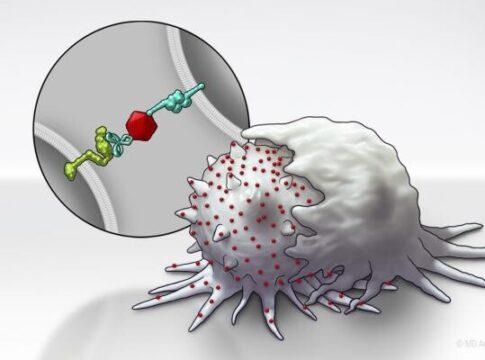
South Korean researchers may have found a safer way to fight lung cancer—using ultra-small molecules known as nanobodies.
A team at the Korea Research Institute of Bioscience and Biotechnology (KRIBB) has developed a therapy that shrank tumors by up to 90% in preclinical trials, according to findings published in Signal Transduction and Targeted Therapy. Unlike conventional chemotherapy, the approach significantly reduced damage to healthy organs such as the heart, liver, and kidneys.
Nanobodies, first discovered in the immune systems of llamas and alpacas, are about ten times smaller than traditional antibodies. Their size allows them to slip through tumor tissue and attack cancer cells directly.
The KRIBB team’s innovation pairs the nanobody with tiny lipid capsules carrying the chemotherapy drug doxorubicin. This “smart delivery system” delivered the drug three times more effectively than standard methods.
“It’s like sending in a motorcycle instead of a truck,” explained lead researcher Dr. Kim Jae-Hoon. “Nanobodies reach places traditional therapies cannot.”
Lung cancer kills 1.8 million people worldwide each year, according to the World Health Organization, and treatment costs add up to billions annually. Experts believe nanobody-based therapies could lower healthcare costs by reducing side effects and hospitalizations.
“This could mark a turning point in oncology,” said Dr. Elena García, an oncologist in Madrid not involved in the study. “If human trials confirm the results, nanobodies may redefine cancer treatment.”
KRIBB researchers hope to begin human clinical trials within two years. If successful, the therapy could first help patients with advanced or resistant lung cancer before expanding to other cancers.
As Dr. Kim summarized, “Our goal is simple: destroy tumors precisely, without destroying patients in the process.”