Iraq’s long-envisioned Development Road — a 1,200-kilometre multi-modal corridor linking Grand Al-Faw Port on the Gulf to Turkey’s border — is approaching a decisive stage. The government will present the completed techno-economic study, prepared by Oliver Wyman, at a ministerial meeting in mid-October with Turkey, the UAE, and Qatar, marking the most advanced step yet in turning the project from blueprint to execution.
According to Transport Minister Razzaq Muhaibis Al-Saadawi, the study goes beyond engineering design, laying out a full financial and economic model for the corridor, which includes industrial cities along the route and highlights investment opportunities across eight key sectors — agriculture, industry, trade, tourism, energy, logistics services, and telecommunications. The objective, officials say, is to transform Iraq from a resource-based economy into a regional logistics and manufacturing hub.
Stretching from Basra through Karbala, Baghdad, and Mosul to the Turkish gateways at Ovaköy and Faysh Khabur, the corridor promises to connect Gulf shipping lanes directly to European markets. Its southern anchor, the Grand Al-Faw Port, is already advancing rapidly: breakwaters and berths have been completed, with expansion works designed to make it one of the largest ports in the Middle East.
The core transport infrastructure — comprising dual road and high-speed rail systems — is estimated at $17 billion, though cost projections rise to $24 billion once utilities, energy connections, and telecom systems are factored in. The rail component alone could account for $10.5 billion, with roads around $6.5 billion.
Iraq aims to finalize corridor designs by 2025, with tenders to launch later that year, targeting initial operational phases by 2028 and full corridor maturity through the 2030s. These milestones, however, depend heavily on the legal and institutional groundwork now being finalized.
Officials confirm that Iraq is working to advance the legal framework and draft associated construction and operational rules in coordination with Oliver Wyman, indicating that some enabling conditions are not yet fully settled. This includes finalizing land acquisition procedures, investment protection clauses, and the governance of the proposed Development Road Authority — a new body expected to function as a “mini-cabinet” reporting directly to the Prime Minister to expedite investor approvals and minimize bureaucratic delays.
The upcoming mid-October ministerial meeting will not serve as a binary “go or no-go” decision, but rather as a strategic review and investment roundtable. The agenda will focus on funding mechanisms, partnership models, and milestone alignment among Iraq, Turkey, the UAE, and Qatar.
In essence, the session will act as a checkpoint — showcasing the finalized study, seeking regional financing commitments, and building consensus on implementation timelines. Any final decision to proceed with construction or tendering will likely follow once the legal framework and project governance are formally approved by Iraq’s higher committee.
For Iraq, the Development Road represents a chance to restructure its economy, potentially adding up to 20% to GDP and generating over one million jobs. For Turkey, it enhances its role as a bridge between Asia and Europe, reinforcing Ankara’s ambitions as a logistics and industrial hub. Meanwhile, Gulf partners — notably the UAE and Qatar — see in the project an opportunity to deploy capital, expertise, and logistics infrastructure into a corridor that could redefine regional trade routes.
The initiative also carries geopolitical significance, providing a direct Gulf-Europe connection that bypasses Iran, reshaping the balance of trade influence in the region. Iraq’s effort to secure multilateral funding from Gulf sovereign wealth funds and Turkey’s development agencies underscores its intent to anchor the project within a regional economic coalition.
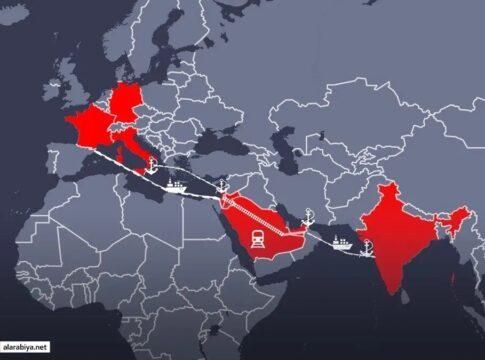
The Development Road enters an increasingly competitive global logistics landscape. It parallels yet diverges from mega-initiatives like the India-Middle East-Europe Corridor (IMEC) and China’s Belt and Road Initiative (BRI). Iraq’s advantage lies in its geographical centrality and government-backed pragmatism — a nationally anchored plan, regionally supported, and technically validated.
In comparative terms, the land corridor could halve shipping times between the Gulf and Europe, especially during Red Sea or Suez Canal disruptions, making it a vital redundancy route. Yet its long-term competitiveness will hinge on security, customs efficiency (TIR systems), political stability and infrastructure reliability.
The Development Road has moved well beyond the conceptual stage. With Oliver Wyman’s economic and legal models complete, Iraq’s challenge now lies in translating plans into contracts. The October ministerial is expected to yield an agreed timeline for tender releases, funding tranches, and regulatory milestones.
If Baghdad can secure regional funding and lock in the enabling legal framework, the project could redefine the Middle East’s trade geography — turning Iraq into the land bridge between the Arabian Gulf and Europe, complementing Suez in normal times and outpacing it during maritime disruptions.
The coming months, and particularly the outcomes of the October meeting, will determine whether Iraq’s Route vision indeed becomes the region’s next economic reality.