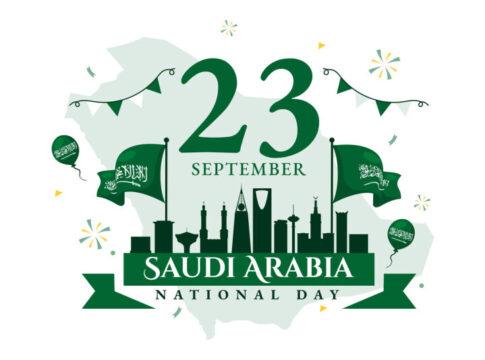
On a September day in 1932, Abdulaziz Al Saud stitched together a vast desert realm into a single state. That act of nation-building—equal parts diplomacy, grit and faith—set in motion a story retold for generations: wells struck at Dammam, caravans giving way to highways, and a society transformed by education and enterprise. Nine decades later, the Kingdom stands at another hinge of history. “Vision 2030” is the country’s new evolution: a decisive pivot from oil dependence to a broader industrial and services economy, with culture, tourism, logistics and technology at its core.
The discovery of oil powered the state’s early institutions and its social compact. Industrial champions followed; infrastructure rose; cities modernised. But the reforms of the past decade mark a sharper turn: opening to visitors, investing in creative industries and advanced manufacturing, and building capital markets to finance it all. At the centre is the Public Investment Fund, now a global allocator of scale with an explicit mandate to seed new sectors at home while investing abroad, with a target of roughly two trillion dollars in assets by 2030.
On the ground, three shifts define the Kingdom’s momentum. Tourism has moved from experiment to engine. In 2019, Saudi Arabia issued its first leisure e-visas. By 2023, it had already counted over one hundred million visits, hitting its original 2030 target seven years early and resetting the ambition to one hundred and fifty million by the end of the decade. Inbound spending reached a record SR 135 billion, while global milestones such as Expo 2030 in Riyadh and the FIFA World Cup in 2034 are set to anchor the Kingdom on the world’s calendar. Equally significant is the quiet revolution in the labour market. Female participation has surpassed Vision 2030’s original target, with women’s employment rates climbing into the mid-thirties percentage. Unemployment among Saudi citizens fell toward historic lows in 2024, reflecting strong private-sector hiring. Meanwhile, non-oil activity now accounts for nearly half of GDP, growing steadily even as oil output cycles with OPEC+ policy. The IMF forecasts growth of around three to three-and-a-half percent in 2025, underscoring resilience beyond hydrocarbons.
If the Kingdom’s story is one of unification and renewal, its bond with Egypt has been one of continuity and solidarity. The two nations—guardians of Arab identity and leaders of the Islamic world—have walked parallel paths, often converging at moments of challenge and opportunity. From King Abdulaziz’s early correspondence with Egypt’s leadership to the deployment of Egyptian teachers, doctors and engineers who helped build Saudi Arabia’s modern institutions, the relationship was lived through people as much as states. Saudi students studied at Cairo’s universities, while Egyptian theatre and cinema shaped cultural life in the Kingdom. The 1973 October War sealed a political partnership, with Riyadh’s oil embargo and Cairo’s frontline sacrifices reinforcing Arab solidarity.
Today, that bond is institutionalised in a dense web of trade and investment, anchored by both People’s common values, devotion and aspirations. Saudi Arabia is one of Egypt’s largest investors, with projects valued at more than thirty-five billion dollars across real estate, energy, logistics and tourism. The Suez Canal Economic Zone is emerging as a hub for Saudi exports into Africa, while Egyptian contractors are deeply involved in Saudi giga-projects from NEOM to the Red Sea. Millions of Egyptians live and work in the Kingdom building the country’s vision hand in hand with their Saudi peers, remitting billions back home, while Saudi tourists remain among Egypt’s top inbound visitors, Egyptian religious tourism are among the top inbound visitors. Diplomatically, both governments coordinate closely in global and regional security frameworks, anchoring stability in a turbulent region.
Looking ahead, Vision 2030 intersects with Egypt’s own reform agenda. Both countries aim to expand renewable energy, upgrade logistics corridors and scale digital transformation. Egypt’s ports and the Suez Canal are natural extensions of Saudi Arabia’s logistics ambitions, while joint ventures in hydrogen and renewables could position the two as energy hubs linking Europe, Africa and Asia. Beyond infrastructure, the future lies in people. Young Saudis and Egyptians—more than half of each population—are increasingly connected through digital platforms, cultural exchanges and startups. Joint initiatives in education, research and fintech promise to carry the relationship beyond oil and aid into innovation and shared prosperity.
The coming decade will be defined by how successfully Saudi Arabia executes this transformation. The Public Investment Fund will continue driving mega-projects at home while investing abroad, testing the Kingdom’s ability to balance ambition with fiscal discipline. Tourism projects from NEOM to Diriyah will shift from renderings to reality, with Expo 2030 and the FIFA World Cup setting immovable deadlines. In parallel, the green power shift aims to deliver half of the country’s electricity from renewables by 2030, an industrial bet that could free crude for export while spawning supply chains in new technologies. Sustaining gains in female participation, youth skills and entrepreneurship will also be crucial, given that more than half the population is under thirty.
Beyond infrastructure and economics, Saudi Arabia is also investing in soft power—film, museums, esports, and cultural festivals that both bind citizens and welcome visitors. Expo 2030 will serve as a six-month world’s fair of innovation; the World Cup will showcase capacity at a global scale while drawing the world’s attention. Egypt’s artists, entrepreneurs and professionals are eternally part of that fabric, ensuring cultural and human bridges evolve alongside commercial ties.
Saudi National Day has always been about continuity—values passed from one generation to the next. What distinguishes this era is velocity. A country once defined by a single resource is building a portfolio of advantages: location, logistics, culture, capital and people. For Egypt, this journey is not that of an observer but of a partner. Together, the two nations are stronger in reshaping the structure of the Region on the map. If Vision 2030 succeeds, it will not only mark Saudi Arabia’s transformation—it will stand as a shared chapter in the shared future of the Region.