
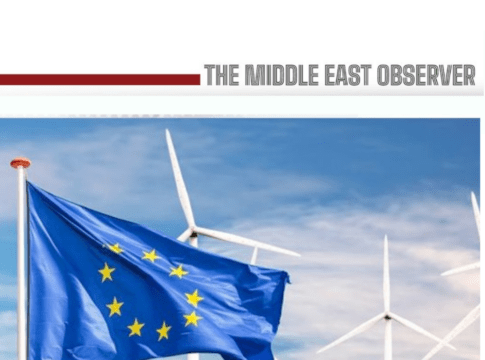
Europe’s energy crisis did not end when prices retreated from their 2022 highs; it entered a more complex phase. The continent has successfully dismantled its reliance on Russian pipeline gas, avoided systemic shortages, and stabilised markets. But the architecture holding this stability together is increasingly LNG-centric, with a growing share sourced from the United States. The defining challenge of the current decade is therefore not how Europe survives without Russian gas, but whether it can prevent a temporary solution from hardening into a new structural dependency before domestic alternatives fully take hold.
The period to 2030 is the most delicate phase of Europe’s energy transition. It is neither a state of emergency nor one of independence, but a managed balancing act. Gas remains indispensable to system stability, particularly during winter peaks and periods of low renewable output, yet its strategic role must diminish steadily. Europe has already demonstrated that this is feasible. Gas demand remains roughly 20 per cent below 2021 levels, a reduction driven not only by weather but by efficiency gains, fuel switching, behavioural change and early electrification. This reduction alone has done more to improve Europe’s geopolitical position than any single supply deal.
At the same time, Europe’s power system is changing faster than public debate often suggests. Renewable capacity additions, especially solar, have accelerated sharply, and electricity generation is increasingly decoupled from fossil fuels during large parts of the year. However, this progress coexists with record LNG imports. The apparent contradiction reflects a system still reliant on gas as the marginal balancing fuel rather than as a core source of energy. For policymakers, this creates a narrow but critical window: gas must be secured for reliability, yet contracted in a way that allows its role to shrink rather than persist.
Up to 2030, the correct strategy is not to eliminate gas, but to demote it. LNG should be treated explicitly as insurance, not as a foundation. That implies prioritising flexibility over volume, avoiding rigid long-term contracts that extend deep into the 2030s, and preserving optionality as domestic generation expands. The risk Europe now faces is not physical scarcity, but concentration. As global LNG supply growth becomes increasingly dominated by the United States, Europe’s exposure shifts from one geopolitical axis to another. Even friendly suppliers introduce vulnerability when they dominate marginal pricing, especially in a market where weather events and domestic constraints can transmit volatility across oceans.
Demand reduction remains the most underappreciated pillar of energy security in this phase. Every unit of energy not consumed permanently removes import exposure, price risk and infrastructure strain. Efficiency measures, electrification of heating and transport, and smarter demand response offer compounding returns that no supply-side investment can match. The policy lesson of the past three years is clear: energy savings are not a temporary sacrifice but a structural asset.
By the end of this decade, if Europe delivers on its binding renewables targets and prevents a rebound in gas consumption, it can reach a position of strategic energy security. In such a system, gas is no longer system-critical for most hours, storage and networks can absorb shocks, and external suppliers lose coercive leverage. This does not mean zero imports, but it does mean that energy prices and availability are increasingly determined by domestic factors rather than global fuel markets.
Beyond 2030, the transition becomes less about fuel substitution and more about system design. By the mid-2030s, with sufficient investment in grids, storage, interconnection and flexibility, gas can be largely confined to backup and peak roles in the power sector. At that point, Europe would be effectively independent in electricity generation, with imported gas no longer setting prices or shaping policy choices. By around 2040, the remaining energy security challenges are likely to shift again, away from fuels altogether and towards clean-technology supply chains, critical minerals and system resilience.
The strategic mistake would be to misread today’s relative calm as proof that Europe has solved its energy problem. In reality, the current phase is the bridge between vulnerability and independence. If managed carefully, it leads to a system where security, affordability and decarbonisation reinforce each other. If mismanaged, it risks locking Europe into a second era of dependence, this time by contract rather than by pipeline. The outcome will be decided less by the availability of gas than by the discipline with which Europe plans its exit from it.