
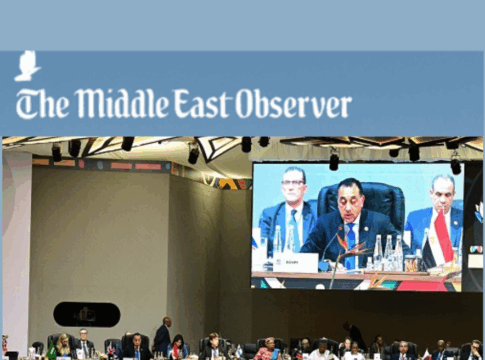
Egypt’s participation in the 2025 G20 Leaders’ Summit in Johannesburg marked both continuity and escalation in Cairo’s engagement with the world’s premier economic forum. Prime Minister Mostafa Madbouly attended on behalf of President Abdel-Fattah El-Sisi as Egypt joined the gathering as a guest country for the third consecutive year – and the fifth time since the G20’s creation in 1999.
Hosted by South Africa under the theme “Solidarity, Equality, Sustainability”, the Johannesburg summit – the first G20 held on African soil – adopted a 122-point Leaders’ Declaration at the opening session, despite a boycott by the United States. The text put debt sustainability, climate action, disaster risk reduction, critical minerals, food security and responsible artificial intelligence at the centre of the G20 agenda, including commitments to strengthen multilateral development banks (MDBs), improve the global debt architecture and scale up financing for a just energy transition and resilient food systems.
Madbouly used the plenary discussions to argue that overlapping crises – from climate shocks and food insecurity to debt and geopolitical conflict – are eroding decades of development gains and hitting the Global South hardest. In a session on “Inclusive and Sustainable Economic Growth, Trade, Development Financing and Debt Challenges”, he called for a fundamental overhaul of the “complex and fragmented” global debt system and for stronger representation of developing economies in global economic governance.
The Egyptian premier urged G20 members to:
- Expand concessional finance and non-debt instruments for developing countries and reform MDB business models to unlock more affordable climate and development finance.
- Reinforce a rules-based multilateral trading system, with the WTO at its core, to ensure trade remains a driver of inclusive growth.
- Deliver on climate-finance pledges and support just energy transitions, especially in regions where hundreds of millions still lack access to electricity.
Madbouly also linked Egypt’s G20 role to its COP27 legacy, highlighting Cairo’s contribution to advancing the Loss and Damage Fund and the broader just-transition agenda. He stressed that concessional finance, technology transfer and capacity-building are “crucial” if developing countries are to pursue ambitious climate action without sacrificing development priorities.
In a politically significant signal, Madbouly announced Egypt’s readiness to host an international conference on early recovery and reconstruction in Gaza, inviting G20 members and partners to participate. He framed reconstruction not only as a humanitarian and regional stability imperative, but also as a test of whether global institutions can respond effectively to protracted crises while maintaining focus on long-term development.
At the thematic session titled “Toward a Resilient World: The G20’s Contribution to Reducing Disaster Risks, Climate Change, a Just Energy Transition, and Food Systems”, Madbouly reinforced Egypt’s call for the G20 to take a leading role in reshaping global finance for resilience.
He warned that the world faces “overlapping and increasingly complex crises” and argued that the G20 must:
- Strengthen MDBs’ capacity to finance climate resilience and disaster-risk reduction.
- Support countries in implementing just energy transitions that balance decarbonisation with energy security and social stability.
- Address mounting food-security risks through open trade, resilient value chains and targeted support to low-income and fragile states.See News+1
Madbouly also reminded leaders that Egypt, in cooperation with South Africa’s G20 presidency, hosted the third meeting of the G20 Food Security Working Group in Cairo in September 2025, positioning the country as a regional convener on food-system resilience and South–South cooperation.
Bilateral diplomacy with Japan: AI, technology and African trilateral cooperation
On the margins of the summit, Madbouly held a high-profile meeting with Japanese Prime Minister Sanae Takaichi, the first woman to hold the post in Tokyo. Both sides used the encounter to signal a deepening “strategic partnership”, building on the upgrade in relations announced during the earlier PM Fumio Kishida’s visit to Cairo in April 2023.
According to Egyptian and Japanese readouts, the two leaders:
- Highlighted Japan’s contribution to flagship Egyptian projects, especially the Grand Egyptian Museum (GEM), and broader cooperation in education.
- Agreed to broaden cooperation in advanced technology and artificial intelligence, including AI governance frameworks, data protection and ethics – aligning Egypt’s domestic digital-transformation agenda with Japan’s global AI priorities.
- Discussed expanding Japanese investment in manufacturing, green industries and digital infrastructure, building on Japan’s existing role as a key partner in Egyptian industrial and infrastructure projects.
- Reaffirmed support for trilateral cooperation between JICA, the Egyptian Agency of Partnership for Development (EAPD) and African countries, particularly in peacekeeping, peacebuilding and sustainable development programmes.
No new binding agreements or MoUs were formally announced in Johannesburg, but both governments clearly framed the meeting as a springboard for next-stage cooperation in technology, AI and African development, building on a series of investment and cooperation agreements signed in earlier high-level encounters.
Vietnam: toward a possible free trade agreement and expanded investment
Madbouly also met Vietnamese Prime Minister Pham Minh Chinh, in talks that placed trade and investment at the centre of a rapidly warming relationship. Cairo and Hanoi have already elevated their ties to a strategic partnership, and the Johannesburg meeting added a clear new direction: exploring a bilateral free trade agreement (FTA).
According to Egyptian and Vietnamese reports, the two sides:
- Discussed starting feasibility studies and talks on an Egypt–Vietnam FTA, leveraging each country’s network of trade agreements to open African and Asian markets to one another’s exports.
- Highlighted existing Vietnamese investments in Egypt, including EuroPlas’ plastics plant in Sadat City and its planned expansion in the Suez Canal Economic Zone, and a garment partnership between Song Hong and Giza Spinning and Weaving in Aswan.
- Noted Vietnamese interest, including from Vingroup, in electric-vehicle manufacturing and related supply chains in Egypt.
- Agreed to consider easier visa procedures and investment facilitation for business people, and to encourage stronger private-sector partnerships, possibly under a future joint high-level committee.
- Identified telecommunications and information technology as promising new areas for cooperation, with Egypt expressing interest in attracting Vietnamese tech investment into its free zones and digital clusters.
Again, no FTA was signed in Johannesburg; rather, the summit served as a political platform to signal intent and instruct relevant ministries and private-sector actors to follow up with technical work and exploratory negotiations.
Africa’s G20 moment and Egypt’s positioning
The Johannesburg Leaders’ Declaration captured key African and Global South priorities that Egypt has championed in other forums:
- Debt and international financial architecture: leaders acknowledged the need to ease the debt burden on vulnerable economies and strengthen MDBs, including through innovative instruments and crisis-resilient debt clauses.
- Just energy transition and climate: the G20 reaffirmed commitments to expand renewable energy and energy efficiency, called for scaled-up financing for sustainable energy transitions, and recognised that Africa must be able to leverage its critical minerals and natural resources for development.
- Disaster risk reduction and food security: leaders highlighted post-disaster reconstruction, resilient food systems and support for smallholder farmers, echoing themes from the South Africa-chaired G20 Disaster Risk Reduction and Food Security working groups, in which Egypt has been an active participant.
- Artificial intelligence and digital transformation: the summit launched an “AI for Africa” initiative and endorsed principles for safe, rights-respecting AI governance – directly aligning with Egypt’s bilateral discussions with Japan on AI policy and with its broader digital-economy agenda.
By tying its interventions on climate finance, debt, food security and Gaza reconstruction to the broader G20 outcomes, Egypt positioned itself as a bridge between Africa, the wider Global South and the G20 core – a country arguing that reforms to finance, trade and technology governance must be judged by whether they deliver tangible benefits for vulnerable populations.
In sum, Egypt’s participation in the Johannesburg G20 Summit can be read on three mutually reinforcing levels:
- Multilateral voice: Madbouly pushed for concrete reforms in debt relief, climate finance and MDB governance, while spotlighting Gaza’s reconstruction needs within a global development frame.
- Strategic partnerships in Asia: Meetings with Japan and Vietnam deepened Egypt’s strategic links in East Asia, with a focus on technology, AI, industrial investment and potential trade liberalisation.
- African positioning: In the first G20 hosted in Africa – and amid stark geopolitical tensions – Egypt aligned itself with South Africa’s emphasis on solidarity, equality and sustainability, reinforcing its own narrative as a regional hub for climate diplomacy, food-security cooperation and post-conflict reconstruction.
If the follow-up work on Gaza, MDB reform, AI governance and a possible Egypt–Vietnam free trade track moves forward in the coming year, Johannesburg will likely be remembered in Cairo not just as another invitation to the G20 table, but as a pivot point in Egypt’s effort to convert summit diplomacy into durable economic and strategic gains.