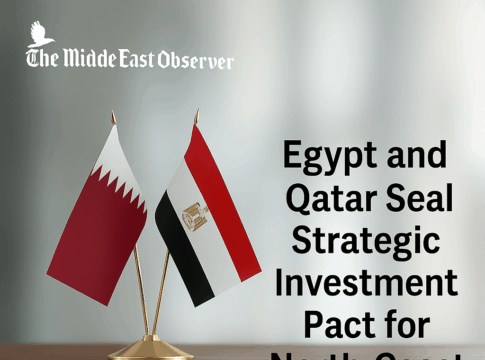
Egypt and Qatar are preparing to sign an investment partnership in the coming days to activate a Qatari-backed development package focused on Egypt’s Matrouh Governorate, marking a major step forward in bilateral economic relations. The agreement, which will launch a large-scale project in the Samla and Alam El-Roum areas on the country’s north-western coast, underscores renewed momentum between the two Arab nations after months of high-level consultations.
The accord follows a meeting in Doha between Egyptian Prime Minister Mostafa Madbouly and his Qatari counterpart Sheikh Mohammed bin Abdulrahman bin Jassim Al Thani, held on the sidelines of the inaugural Global Alliance to Combat Hunger and Poverty Summit. Both leaders reaffirmed their commitment to translating memoranda of understanding—first signed during the sixth session of the Egyptian-Qatari Joint Higher Committee in New Alamein City last August—into concrete investment projects that would enhance mutual interests and drive long-term growth.
The partnership aims to channel Qatari capital into the Samla and Alam El-Roum development zones, positioning Matrouh as a future hub for tourism, logistics, and infrastructure investment. While official figures have yet to be disclosed, the project is viewed within the context of Qatar’s broader multi-billion-dollar commitment to Egypt—part of Doha’s regional strategy to invest in strategic assets that combine economic return with political stability.
According to senior Egyptian officials, the forthcoming signing ceremony will formalize the “activation of the Qatari investment package,” converting earlier pledges into executable ventures. For Cairo, the timing could hardly be more critical: Egypt’s government is seeking to consolidate economic gains achieved through fiscal reform, while easing foreign-currency pressures and revitalizing investor confidence after a period of turbulence.
Prime Minister Madbouly used the Doha meetings to showcase Egypt’s recent economic progress. He noted that reforms implemented under the state’s economic restructuring program have started to yield results, including a more stable foreign-currency market and the resumption of profit repatriation by foreign companies. Inflation, he said, is expected to decline from around 12 percent this year to 8 percent next year, reflecting tighter monetary coordination and improved food-supply conditions.
He also highlighted new measures designed to simplify business procedures and resolve disputes facing foreign investors, part of a wider effort led by the Ministry of Investment and Foreign Trade to improve Egypt’s investment climate. “The Egyptian government is ready to meet with any Qatari investor to discuss proposals and remove barriers,” Madbouly said, adding that Egypt is “keen for every Qatari investment experience to be successful.”
Qatar’s leadership reciprocated the positive tone. Sheikh Mohammed Al Thani reiterated Doha’s “full support for Egypt’s pursuit of growth and stability,” while stressing the importance of strengthening cooperation across key sectors—from energy and tourism to logistics, finance, and agriculture.
In a separate meeting, Prime Minister Madbouly also held talks with the Association of Qatari Businessmen, headed by Sheikh Faisal bin Qassim Al Thani, in the presence of Egypt’s Ambassador to Qatar, Walid El-Feki. The association’s members praised Egypt’s reform efforts and expressed their readiness to expand investment partnerships. They congratulated Egypt on the recent opening of the Grand Egyptian Museum, describing it as “a source of pride for all Arabs” and a symbol of Egypt’s enduring cultural leadership.
During the discussions, Qatari investors reviewed Egypt’s incentive framework for foreign and Arab investors, while Egyptian officials presented new data on national development projects and presidential initiatives—such as the “Housing for All Egyptians” program—aimed at achieving inclusive growth. The Qatari delegation emphasized their ongoing communication with Egypt’s embassy in Doha and voiced optimism about the long-term investment outlook.
Beyond its immediate economic impact, the Matrouh investment pact carries broader geopolitical weight. For Egypt, it consolidates ties with a key Gulf partner at a moment when external financing remains essential for macroeconomic stability. For Qatar, it expands its investment footprint in a pivotal Arab market while reinforcing its role as a constructive regional stakeholder following the restoration of full diplomatic ties in 2021.
Analysts view the agreement as emblematic of a new era in Arab economic diplomacy, one defined less by aid transfers and more by joint ventures, infrastructure partnerships, and cross-sector investment. “It’s part of a pragmatic Gulf trend,” said one Cairo-based economist, “where regional funds are now looking for tangible, revenue-generating projects that also support political stability.”
Officials from both sides indicated that the formal signing of the investment agreement is imminent. The next stage will involve defining the project’s joint-venture structure, capital allocation, and implementation roadmap—including land-development plans, infrastructure timelines, and job-creation targets.
The Matrouh initiative is expected to be the first in a broader portfolio of Qatari-Egyptian collaborations, potentially expanding into energy, green hydrogen, and smart-city development. If executed effectively, it could serve as a flagship example of how Gulf capital can support Egypt’s growth while generating sustainable returns.