
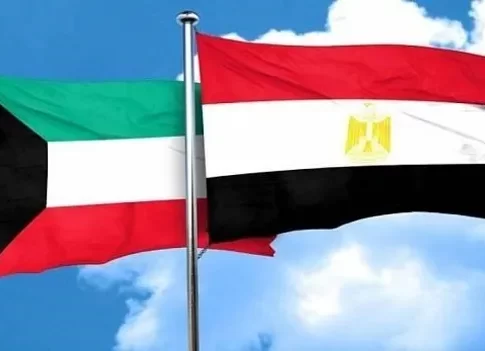
Egypt is advancing efforts to elevate its trade and investment partnership with Kuwait, targeting a bilateral trade volume exceeding US$1 billion by 2026. Egyptian Prime Minister Mostafa Madbouly is slated to host his Kuwaiti counterpart, Sheikh Ahmad Abdullah Al-Ahmad Al-Sabah, in Cairo, where the two governments will formalise a broad package of memoranda of understanding and bilateral agreements. According to senior Egyptian officials, the framework will cover cooperation across agriculture, higher education, renewable energy, telecommunications, civil aviation, banking, automotive manufacturing and defence, signalling both sides’ shared intention to deepen economic ties and diversify beyond traditional trade flows.
At present, Egypt’s exports to Kuwait span vegetables, fruits, ready-made garments, cocoa products and electrical appliances, while its imports from Kuwait consist largely of fuels, mineral oils, petrochemical products, organic chemicals and plastics. These figures underscore the complementarity of the two economies and the scope for scaling up value-added trade.
In preparation for the meeting, Egypt and Kuwait’s joint ministerial trade committee—first convened in early February 2025—has laid groundwork for expanding industrial cooperation and facilitating regulatory reform to ease trade and investment flows. The agenda now envisages Kuwait injecting roughly US$1 billion into Egypt before end-2025 under previously signed agreements, with the two governments working toward a further investment package of up to US$6.5 billion through end-2026, targeting key areas such as energy infrastructure, manufacturing and clean-tech.
Analysts say the timing of the memorandum rollout is significant for both partners. For Egypt, it aligns with the government’s reform drive and ambition to attract Foreign capital, while for Kuwait it offers diversification opportunities as it reallocates capital beyond hydrocarbons. Both sides appear committed to shifting the emphasis from mere commodity trade to joint investment, industrial localisation (notably in automotive production) and services-led collaboration. The agenda reflects this by placing sectors such as higher education, banking and telecommunications alongside the more traditional energy-industry cooperation.
Still, implementation will be key, as both governments move from commitments to execution over the next two months leading into 2026. Turning the newly signed memorandum into tangible projects will require close regulatory coordination, accelerated infrastructure facilitation, and sustained political engagement on both sides. According to officials familiar with the agenda, joint working groups will meet in December and January to finalize sectoral frameworks—particularly in energy, manufacturing, and telecommunications—before the formal rollout of investment projects in early 2026. If the process unfolds as planned, the Egypt–Kuwait economic partnership could evolve into a central pillar of intra-Arab economic cooperation, setting a regional model for investment-led diversification and long-term integration across key development sectors.