
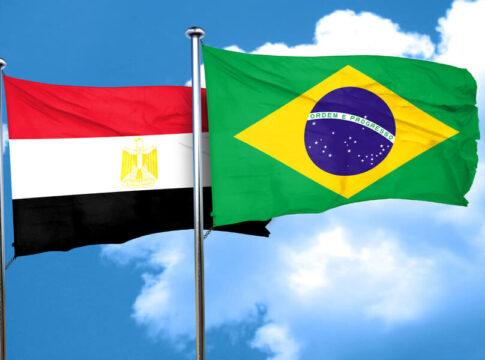
Brazil and Egypt are striking mirrors in scale—Brazil with over 215 million citizens, Egypt with roughly 110 million. But beyond demographics, both share a passionate, life-loving culture, where street soccer, music, arts, and family bonds run deep.
Their routes to autonomy also resonate: Brazil’s celebrated cry of “Independência ou Morte!” in 1822 was a declaration forged through negotiation and strategic leadership. Egypt, too, gained sovereignty through diplomatic strength and popular will, not brute infiltration. Both nations’ paths showcase how freedom can be forged by dialogue, not just warfare.
Their people share a beloved cultural glue: football. From the favelas of Rio to the streets of Cairo, football is more than a sport—it’s community, joy, hope, and collective identity.
The volume of bilateral trade between Egypt and Brazil has soared over the past decade. A snapshot comparison:
- 2015: Brazil exported roughly $2.05 billion worth of goods to Egypt. Egypt’s exports to Brazil were modest: approx. EGP 726,221 thousand in local currency terms—but clearly much lower in USD.
- 2024: Egypt exported US $854.38 million to Brazil, and Brazil’s exports to Egypt totaled about US $4 billion.
This means trade has nearly doubled or more than doubled in less than ten years—highlighting a dynamic acceleration of cooperation, grounded in complementary strengths.
Both countries’ memberships in global coalitions reflect growing mutual importance.
- BRICS: Egypt became part of BRICS in January 2024, joining Brazil, Russia, India, China, and South Africa. This elevated platform enables enhanced trade, investment, and strategic collaboration.
- ASPA (Summit of South American–Arab Countries): This bi-regional forum has fostered collaboration across economics, culture, and diplomacy, reinforcing ties between Egypt and Brazil within a broader Arab–South American framework.
Together, BRICS and ASPA provide multilateral momentum for Egypt–Brazil ties to deepen across sectors—from agribusiness and infrastructure to education and culture.
As trade expands, strategic collaboration can extend far beyond exports and imports. Here are some rich possibilities:
| Sector | Potential Areas of Expansion |
|---|---|
| Renewable Energy & Biofuels | Brazil leads in bioenergy and sustainable agriculture; Egypt has a growing solar and wind infrastructure ecosystem—joint R&D, technology transfers, and clean energy projects could flourish. |
| Agritech & Food Security | Combine Brazil’s deep expertise in tropical agri-supply chains with Egypt’s high-tech irrigation, agronomy, and food processing to tackle regional food security and export bonds. |
| Pharmaceuticals & Healthcare Manufacturing | Egypt’s growing pharma industry and Brazil’s massive domestic demand create paths for co-production, clinical trials, and regional distribution networks. |
| FinTech & Digital Finance | Brazil’s fintech success, especially in mobile and digital banking (e.g. Nubank), can be a model for Egypt’s rapidly expanding fintech space—think cross-training, regulatory dialogues, and joint platforms. |
| Automotive & EV Manufacturing | Egypt’s developing automotive base (EV plans, public transit modernization) complements Brazil’s manufacturing scale—there’s potential for EV assembly lines, tech transfer, and market access. |
| Tourism & Cultural Exchange | Brazil’s Carnival flair and Egypt’s ancient wonders make a perfect two-country travel circuit, enriched by film co-productions, music festivals, and youth exchanges. |
| Education & Research | Joint university programs, especially in sustainability, geography, and emerging technologies, can bridge academic communities and benefit both nations’ innovation ecosystems. |
| Logistics & Infrastructure | Leveraging Egypt’s strategic Suez Canal and Brazil’s port strength (e.g., Açu Superport), both countries can enhance logistical routes, supply chains, and regional connectivity. |
Imagine a narrative: In 1822, Brazil’s people cheered “Independência ou Morte!”—a mark of a nation forging its destiny. Now, in 2025, their descendants look over the fireworks in Brasília with renewed optimism, watching a Brazilian flag wave stronger than ever.
In Cairo, Egyptians reflect on centuries of civilization, revolution, and rebirth—mirroring Brazil’s story of resilience and expansion. Both societies are dynamic, youthful, and eager to carve their global footprints.
Today, the scripts of these two nations overlap with vigor: shared multilateral commitments in BRICS, rapid trade expansion, and common loves—from football to festive joy to upward mobility.