
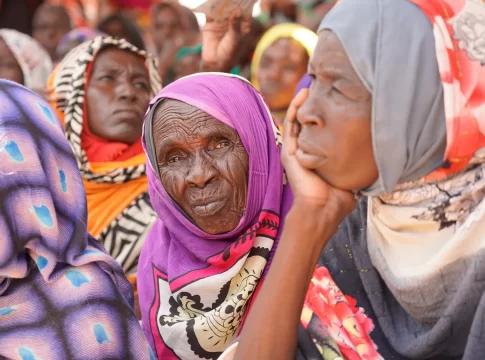
In a sobering wake-up call to the international community, the World Bank’s latest report highlights a dire economic and humanitarian crisis engulfing 39 conflict-affected and fragile countries. Home to over 420 million people living in extreme poverty, these nations face deepening instability, shrinking economies, and vanishing development prospects. Yet, amid global focus on immediate security threats and economic competition, the plight of these fragile states risks being overshadowed by louder headlines.
According to Ayhan Kose, Deputy Chief Economist at the World Bank, these nations are locked in a downward spiral: “Recession, not growth, has become the norm in economies plagued by conflict and instability.” The data is stark. Since 2020, per capita economic output in these 39 countries has declined by an average of 1.8% annually—while other developing nations have grown by 2.9% per year.
Among the 39 fragile or conflict-affected states identified in the report are Sudan, Ukraine, Ethiopia, Gaza, Yemen, Afghanistan, Mozambique, and the Central African Republic. A staggering 21 of these nations are currently mired in active conflict, with violent deaths exceeding 150 per million people annually in the worst-hit zones. In these high-intensity conflict areas, GDP can plummet by up to 20% within just five years—a level of economic regression that devastates generations.
Beyond GDP, the report exposes human development indicators that illustrate the depth of the crisis: life expectancy is five years shorter, infant mortality is double, and average years of schooling are significantly fewer than in comparable countries outside conflict zones. Despite accounting for less than 15% of the global population, these fragile states are home to nearly half of all people living on less than $3 a day.
The growing chasm between stable and fragile countries brings with it a pressing dilemma: how can the global community allocate sufficient support to these severely struggling nations, while also sustaining broader development objectives? This is not merely a moral question but a strategic one. Fragile states are increasingly becoming the epicenters of global migration surges, regional destabilization, and humanitarian crises—each of which spills over into neighboring nations and even into distant developed economies.
According to the UNHCR, there are now over 120 million forcibly displaced people worldwide—a figure that has more than doubled in the last decade. Many of them originate from the same 39 fragile states highlighted in the World Bank report. The resulting pressures on host countries—both developing and developed—are immense: healthcare systems strained, job markets stretched, and political discourse increasingly polarized.
Yet, there are signs of hope. Countries like Nepal, Rwanda, Bosnia and Herzegovina, and Sri Lanka have shown that post-conflict recovery is not only possible but achievable with targeted investment, institutional reform, and international cooperation. These success stories, though limited in number, serve as a template for what’s possible with the right support.
Even as the focus shifts to large economies and new geopolitical alignments, it is vital to recognize the abundance of resources, innovation, and capital that exists globally. High-income nations and wealthier emerging economies must not only offer humanitarian aid but also actively include fragile states in trade frameworks, energy transitions, and infrastructure partnerships. The international community faces a mounting responsibility to recalibrate its priorities. As climate change, migration, and conflict intertwine more tightly, overlooking the world’s most vulnerable regions may no longer be affordable. Investing in resilience in these 39 states today may prove far less costly than dealing with the consequences of neglect tomorrow. This is no longer about charity—it’s about global stability and shared prosperity.
As the world teeters between economic competition and cooperation, balancing global development with targeted support for the most fragile corners of our planet is not just an ethical imperative—it is a matter of global security and long-term economic sanity.