
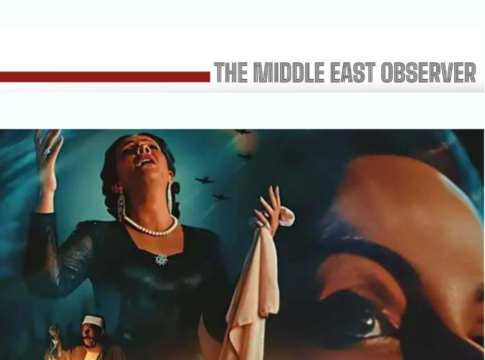
Few Egyptian films arrive burdened with expectations as heavy as those surrounding “Al-Set”. From its earliest promotional materials, the film ignited controversy—not because it had been seen, but because of what it dared to approach. Any work that gestures toward Umm Kulthum is inevitably judged against memory, reverence, and myth rather than cinema alone. In this sense, Al-Set was never granted the luxury of being “just a film.”
The pre-release backlash—mockery of the poster, scepticism toward the trailer—revealed more about the public’s protective instinct toward the “Star of the East” than about the film itself. Yet following its festival screenings in Marrakech and later in Egypt, the tone of the conversation shifted. What emerged was not unanimous praise, but a grudging recognition that Al-Set is neither the sacrilege its critics feared nor the definitive portrait its supporters hoped for.
The central challenge of Al-Set lies in its premise: it is “inspired by” Umm Kulthum’s life, yet audiences insist on reading it as biography. This tension defines the film’s strengths and limitations. The narrative selectively traces moments from her personal and artistic journey, but it rarely dares to dismantle the icon to reveal the woman beneath. The result is a film that gestures toward intimacy without fully committing to it.
Director and writers appear cautious, perhaps understandably so. The film frequently retreats from psychological depth in favour of safe reverence. While this approach protects the legacy it portrays, it also restricts the drama’s emotional range. The most compelling moments are those that briefly suggest vulnerability or contradiction—moments that arrive too sparingly to reshape the portrait in any meaningful way.
At the centre of the film stands Mona Zaki, facing the near-impossible task of embodying a figure whose voice and presence remain unmatched. Zaki approaches the role with visible discipline and respect. Her performance is earnest, technically controlled, and clearly the result of extensive preparation.
Yet sincerity alone does not guarantee transformation. Zaki captures aspects of Umm Kulthum’s authority and composure, but the performance seldom transcends imitation into revelation. One senses the weight of responsibility pressing down on every scene, limiting risk-taking. As Zaki herself has acknowledged, she did everything she could—and that may well be true. The question the film leaves unanswered is whether everything was enough to justify taking on such a role in the first place.
Visually, Al-Set is polished and confident. The production design, costumes, and ensemble casting reflect significant investment and ambition. The supporting cast—featuring an array of major Egyptian stars in cameo roles—adds texture, though at times it feels more like a ceremonial procession than an organic dramatic ensemble.
What the film lacks is emotional volatility. It rarely allows conflict to breathe or contradictions to linger. Relationships that shaped Umm Kulthum’s career are acknowledged, but often softened, as if the film fears the discomfort that true complexity might provoke.
Ultimately, Al-Set is less a bold reinterpretation than a careful negotiation. It does not fail as a cinema, but it stops short of challenging its audience. In choosing reverence over risk, the film secures acceptance at the cost of lasting impact.
And yet, its very existence raises an essential question for Arab cinema: Can we portray our icons without embalming them? Al-Set does not fully answer that question—but it brings it uncomfortably, and necessarily, to the surface.