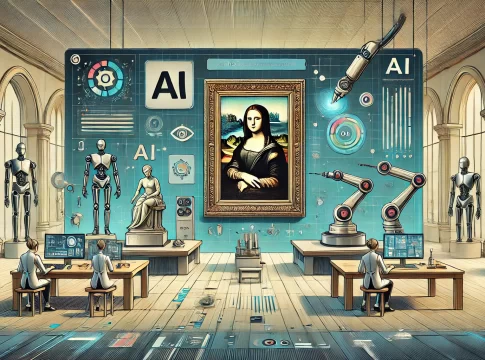
Utilizing sophisticated AI algorithms, researchers from Rutgers University in the United States and the Atelier for Restoration and Research of Paintings in the Netherlands have pioneered a method to identify counterfeit artworks. By deconstructing 300 line drawings from masters like Picasso and Matisse into thousands of individual brushstrokes, they developed a system using a “deep recurrent neural network” to differentiate genuine works from forgeries. This breakthrough technology leverages unique brushstroke patterns, providing a level of accuracy that human experts aspire to achieve.
Karina Popovich, an art authentication expert, has successfully applied this technology on platforms like eBay, exposing 40 paintings as forgeries, including pieces incorrectly attributed to Monet and Renoir. According to The Guardian, these discoveries have prompted platforms to reinforce their commitment to authenticity, with eBay blocking millions of suspected fake listings annually.
Beyond identifying forgeries, AI is also entering the restoration arena. Alex Kashkin, a mechanical engineering student at MIT, has developed advanced AI technology capable of restoring aging or damaged artworks in a fraction of the traditional time. Kashkin’s approach involves high-resolution scans and digital restoration, which are then transferred to physical artworks using a “digital mask.” This method offers a reversible and non-invasive solution to restoration, revolutionizing a field that has long relied on manual processes.
With these innovations, AI promises not only to preserve the authenticity and integrity of artworks but also to democratize the restoration process for historically significant pieces. As AI technology continues to evolve, its potential applications in the art world are boundless, heralding a new era of technological artistry.
“AI’s role in art authentication and restoration is a testament to its transformative potential,” says Dr. Emily Hartwell, a renowned art historian and technology scholar. “The ability to analyze and reconstruct artistic details at such depth is unprecedented and opens up new possibilities for both protecting and appreciating cultural heritage.”
As AI technology advances, its role in safeguarding and restoring art will likely expand, offering new tools for experts and enthusiasts alike. In a world where authenticity is paramount, AI stands as a pivotal player in maintaining the legacy of art for future generations.