Each October, South Korea celebrates one of Asia’s oldest national myths — the story of Dangun Wanggeom, the semi-divine founder of Gojoseon, Korea’s first kingdom, believed to have arisen in 2333 BC. Known as National Foundation Day (Gaecheonjeol) — literally “the day heaven opened” — the holiday fills the country with fireworks, pageantry, and reflection. From the banks of Seoul’s Han River to the ancient Chamseongdan altar on Ganghwa Island, South Koreans honor the legend that marks the birth of their civilization — a moment, according to tradition, when the heavens themselves descended to bless the Korean Peninsula with unity and destiny.
Yet beyond its mythic roots, Gaecheonjeol is also a mirror of modern South Korea’s journey — a nation that, in less than a century, has transformed from the ruins of war into one of the most dynamic and technologically advanced economies in the world. It is both a celebration of history and a reaffirmation of national purpose: the belief that progress, discipline, and innovation are the truest heirs of the Dangun legacy.
Few modern nations embody economic resilience as powerfully as South Korea. Rising from the devastation of the Korean War, the country achieved what economists now call the “Miracle on the Han River” — an era of rapid industrialization and modernization that reshaped it into a global powerhouse.
Today, with a GDP of nearly USD 1.87 trillion, South Korea ranks as the 13th largest economy in the world and the fourth largest in Asia. Its ascent is anchored in globally competitive sectors such as semiconductors, electronics, automobiles, shipbuilding, and advanced materials, all driven by world-renowned conglomerates like Samsung, Hyundai, SK, and LG.
This transformation did not occur by chance. It was built through an export-driven model that married government planning with private enterprise, sustained investment in education, and an enduring national ethos of perfectionism and precision. Even as South Korea now faces demographic shifts and global trade headwinds, it continues to chart a path toward green energy, artificial intelligence, and smart manufacturing, preparing for a future shaped by sustainable innovation.
While South Korea’s industrial prowess drives its economy, its soft power has captivated the world. From the Academy Award-winning Parasite to the global phenomenon of Squid Game and the musical dominance of BTS, South Korean culture has evolved into a global brand known as the “Korean Wave” (Hallyu). What began as local entertainment has become a cultural export worth billions — one that blends creativity, emotional intelligence, and social commentary. South Korea’s thriving Busan International Film Festival, its dynamic digital content ecosystem, and its state support for the arts all reflect a clear national vision: that innovation is not limited to factories and laboratories, but thrives equally on screens, stages, and studios. This cultural ascendancy has helped shape South Korea’s global identity — a country that builds microchips and blockbusters with equal mastery.
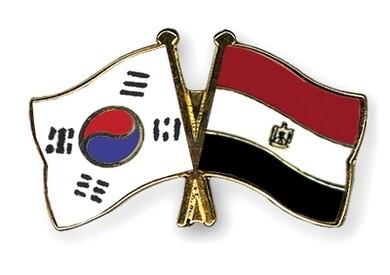
The relationship between Egypt and South Korea, formally established in 1995, has matured into one of the most forward-looking partnerships bridging Asia and Africa. The South Korean Embassy in Cairo, has long served as a hub for cultural exchange and economic collaboration.
As both nations marked 30 years of diplomatic ties, they celebrated under the theme “Five Thousand Years of Civilization,” showcasing a shared respect for heritage and progress. Cultural exhibitions, music performances, and policy dialogues underscored how two ancient civilizations are shaping modern cooperation in technology, education, and industry.
Trade between the two countries reached USD 1.6 billion in 2024, while South Korean investments in Egypt surpassed USD 6 billion, driven largely by manufacturing, electronics, and energy. Leading Korean firms — notably Samsung and LG — have established large-scale production facilities in Beni Suef and 10th of Ramadan City, creating thousands of jobs and turning Egypt into a regional export base for “Made in Egypt” electronics distributed across Africa and the Middle East.
Over 170 Korean companies are currently registered in Egypt, reflecting a growing confidence in the local market. Meanwhile, Egypt exports iron, steel, fertilizers, cement, cotton, and agricultural goods to South Korea, while importing automobiles, electronics, and industrial machinery. This complementarity has deepened trade interdependence and laid a foundation for long-term industrial collaboration.
Korean development assistance, channeled through KOICA and the Economic Development Cooperation Fund, continues to support Egyptian initiatives in education, renewable energy, and infrastructure, cementing a partnership that extends well beyond commerce.
Looking forward, Egypt–South Korea cooperation is poised for even greater expansion. Both nations share an ambition to lead in innovation — South Korea as a global hub for advanced technology, and Egypt as a strategic gateway linking Africa, the Arab world, and Europe.
Key opportunities for collaboration include:
- Renewable energy and green hydrogen, aligning Korea’s engineering expertise with Egypt’s vast solar and wind potential.
- Digital transformation, leveraging Korean advances in AI, semiconductors, and 5G to modernize Egypt’s public sector and smart cities.
- Automotive and EV manufacturing, combining Korean technology with Egypt’s growing industrial base.
- Healthcare, biotechnology, and education, fostering joint research, knowledge transfer, and capacity building.
- Cultural co-production, from cinema and animation to media training, merging Egypt’s storytelling tradition with Korea’s production innovation.
Both governments have expressed interest in negotiating a bilateral Economic Partnership Agreement (EPA) to streamline trade, safeguard investments, and open new avenues for joint ventures. Strategically, such a pact could position Egypt as a manufacturing and logistics hub for Korean enterprises, while granting Egyptian exporters and entrepreneurs access to one of Asia’s most advanced markets.
South Korea’s National Foundation Day is a celebration not only of ancient origins but of enduring progress — proof that a nation’s past can power its future. From the legend of Dangun to the neon skyline of Seoul, South Korea embodies the harmony between tradition and technology, faith and innovation.
For Egypt and South Korea, this same spirit defines a partnership grounded in mutual respect and shared ambition. It is a relationship that goes beyond numbers — a collaboration rooted in creativity, knowledge, and the pursuit of excellence.
As both nations look ahead, the scope of joint projects appears virtually unlimited: from green energy and smart industries to logistics, digital transformation, and cultural diplomacy. Together, they are not only bridging continents — they are shaping a new model of cooperation for a connected, sustainable, and knowledge-driven world.