
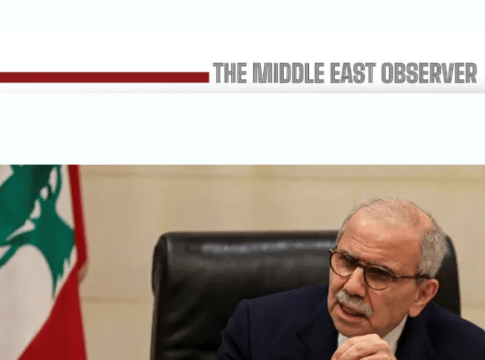
Lebanon’s government has submitted a long-awaited financial gap law, committing to the recovery of the majority of bank deposits as part of a broader effort to resolve the country’s deep-seated financial crisis.
In a televised address last week, Prime Minister Nawaf Salam said the draft law provides a comprehensive legal framework to address deposit losses and close the financial gap in a “systematic and fair” manner, within the limits of available resources. He stressed that the government has chosen to move from “denial of losses” to formally acknowledging them and assuming responsibility.
The legislation is considered a cornerstone of Lebanon’s reform agenda, as it seeks to define accountability for a financial gap estimated at around $80 billion. The shortfall stems from years of government borrowing from the central bank and the latter’s reliance on domestic banks, a cycle that collapsed after the state defaulted on its obligations, triggering a systemic banking crisis.
Under the proposed law, all deposits held by small depositors below $100,000 will be fully recovered, with repayments to be completed within a maximum period of four years. According to Salam, this category represents about 85 percent of all depositors in Lebanon, offering relief to the majority of affected households as the country works to restore confidence in its financial system.