
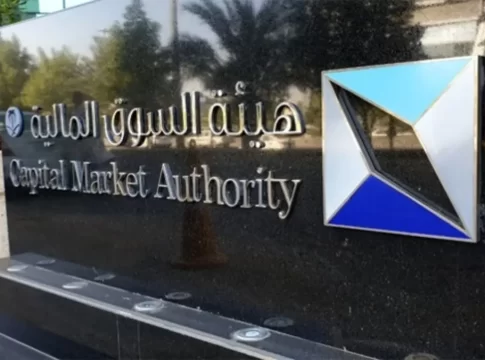
Saudi Arabia’s Capital Market Authority (CMA) has launched a public consultation on a historic proposal to open the Kingdom’s main Tadawul stock market to all non-resident foreign investors, a move that could fundamentally reshape the region’s investment landscape. The draft would effectively remove the long-standing Qualified Foreign Investor (QFI) framework and end swap agreements, allowing international investors to directly buy and hold Saudi-listed shares without meeting prior eligibility conditions. If approved, this would represent one of the most significant liberalisation steps in the history of the Saudi financial sector, reinforcing Riyadh’s ambition to transform its capital markets as a central pillar of Vision 2030.
The proposed change builds on a series of incremental reforms already introduced over recent years. The CMA has gradually eased restrictions, allowing easier account openings for foreigners and expanding access to various types of securities, including those traded on the main market. The regulator also recently implemented a 10% cap on individual foreign ownership and a 49% ceiling on total foreign stakes in any listed company—measures that balance openness with control. Earlier this year, non-Saudis were permitted to invest in firms owning real estate in Mecca and Medina, a decision that underscored the country’s shift toward a more inclusive capital market while maintaining strategic oversight.
The positive implications of such liberalisation could be far-reaching. Direct access for non-resident investors would deepen liquidity, diversify market participants, and improve price discovery by attracting sophisticated global funds. Increased participation could also enhance Saudi Arabia’s standing in major global indices such as MSCI, further drawing in institutional and passive capital. For domestic companies, a larger and more competitive investor base may translate into better valuations and lower financing costs. Beyond capital markets, the move aligns squarely with Vision 2030’s broader economic diversification strategy, mobilising foreign investment to accelerate non-oil growth sectors and support emerging industries from technology to renewable energy.
Yet the reform is not without risk. A fully open market could amplify volatility, particularly in times of global uncertainty, as cross-border capital tends to move quickly in and out of emerging markets. Local regulators will face new challenges in managing market stability, enforcing transparency, and monitoring compliance among a wider array of international participants. While ownership caps remain in place, they may only partially shield against sharp fluctuations in foreign sentiment. The transition away from intermediary-based investment models, such as swap agreements, could also create short-term operational hurdles, testing the readiness of both market infrastructure and investors to adapt.
Analysts note that the CMA’s approach remains cautious, preferring an incremental pathway rather than an abrupt overhaul. This gradualism reflects a careful balancing act between attracting global capital and preserving financial sovereignty. The consultation period will allow stakeholders—from fund managers to domestic investors—to shape the regulatory fine print, which will ultimately determine how smoothly the new system functions.
In essence, Saudi Arabia stands at a pivotal juncture: a more open market promises liquidity, confidence, and global relevance, but it also demands stronger oversight, deeper transparency, and disciplined execution. If the reforms proceed as planned, Riyadh could secure its position as the Middle East’s most dynamic financial hub—yet success will depend on the Kingdom’s ability to welcome the world’s investors without compromising the market’s long-term stability.
