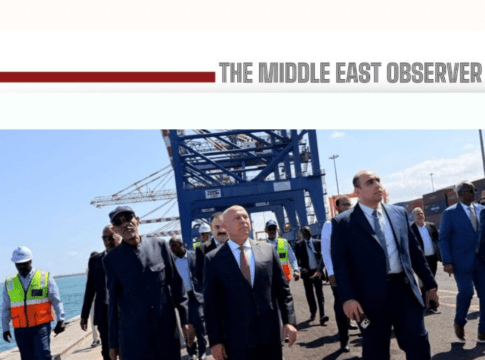
At the core of the package is a framework agreement to develop a multipurpose container terminal in Djibouti. The project will be led by an Egyptian consortium headed by the Holding Company for Maritime & Land Transport (HCMLT), in partnership with Djibouti’s state-owned Great Horn Investment Holding. Officials say the terminal is designed to enhance bilateral trade between Egypt and Djibouti while also serving international shipping lines, reinforcing Djibouti’s role as a critical maritime gateway for East Africa and landlocked neighboring states.
The second agreement is a long-term land lease signed between El Sewedy Electric, its joint venture El Sewedy Logistics Djibouti, the DPFZA, and the Khor Ambado Free Zone Company (KAFZCO). The deal paves the way for establishing a regional logistics hub aimed at facilitating trade flows, warehousing, and value-added services, while improving market access for Egyptian companies across East Africa and the Red Sea corridor.
The third agreement focuses on renewable energy, providing for the development of a 100-megawatt green port solar power project at Djibouti’s Doraleh Container Terminal, operated by the state-owned Société de Gestion du Terminal à conteneurs de Doraleh (SGTD). The project will supply clean and stable electricity to port cranes and heavy equipment, reducing dependence on conventional fuels and shielding port operations from global energy price volatility. It also aligns with Djibouti’s ambitions to position itself as a green logistics and maritime hub.
The Djibouti agreements dovetail with Egypt’s broader transition toward a green economy. Under its FY 2025/2026 public investment plan, Egypt has allocated EGP 637 billion (around USD 12.9 billion) to environmentally friendly projects, representing 55% of total public investments, reflecting a shift toward sustainable infrastructure and energy resilience.
Economic ties between the two countries have gained momentum over the past year. This includes the opening of a Banque Misr branch in Djibouti and the launch of the Egyptian-Djiboutian Joint Business Council in April 2025. The council prioritizes cooperation in energy security, port and free zone development, and the creation of a 150,000-square-metre logistics hub dedicated to Egyptian firms.
During the visit, Al-Wazir also inaugurated a 300-kilowatt solar power station with 1.29 megawatt-hours of battery storage in Omar Kajaa, Arta region, aimed at providing sustainable electricity to local communities and supporting economic activity.
Further discussions covered prospective cooperation in road construction, port expansion, and renewable energy, including plans to develop Djibouti’s National Highway (RN18), conduct feasibility studies for a wind farm in the Djibouti International Free Zone, and pursue additional expansion at the Port of Djibouti.
Collectively, the agreements signal a deepening strategic partnership between Cairo and Djibouti, positioning both countries to benefit from growing trade volumes, greener port operations, and enhanced regional connectivity across the Red Sea and East African markets.