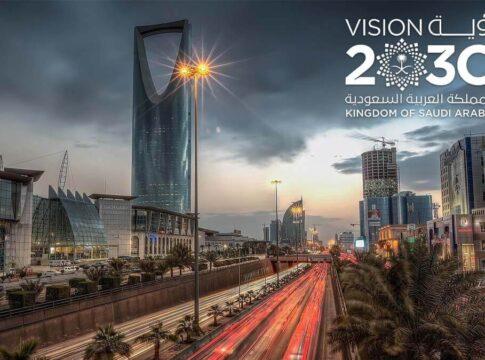
Saudi Arabia’s Investment Minister Khalid Al-Falih announced that 85% of the Kingdom’s Vision 2030 initiatives are either completed or on track, an assertion that underscores both the momentum and maturity of the nation’s transformation while setting the tone for the ongoing Future Investment Initiative (FII9) in Riyadh. The update highlights how far the Kingdom has moved from a hydrocarbons-centric model toward a diversified economy built on innovation, investment, and inclusion.
The evidence of progress is substantial. More than 675 multinational companies have now established their regional headquarters in Riyadh, surpassing the original 2030 target of 500 and positioning the capital as the Middle East’s emerging business hub. Tourism has reached unprecedented levels, with 116 million total visits in 2024—around 30 million international and 86 million domestic—making it one of the most dynamic non-oil sectors and a key driver of local enterprise.
Women’s participation in the workforce has climbed to approximately 36%, exceeding the Vision 2030 target six years ahead of schedule and reflecting the country’s social modernization and policy inclusivity. Non-oil GDP rose 4.3% in 2024 despite reduced oil output and now represents nearly half of total economic activity, while non-oil revenues have nearly doubled since 2016, accounting for almost half of government income by mid-2025. These milestones, supported by consistent policies and strategic capital deployment, reflect how Vision 2030 has evolved from a national ambition into a measurable transformation narrative.
Still, as the Kingdom consolidates its gains, challenges remain. The 85% achievement rate is a macro-level indicator, not a granular dashboard, and several megaprojects—most notably NEOM—have seen re-sequenced timelines and budget adjustments to prioritize infrastructure and hospitality linked to global events such as the 2034 FIFA World Cup. This reflects prudent portfolio management, but it tempers expectations for near-term delivery of the most ambitious undertakings. External headwinds—ranging from oil market constraints and tighter global credit to supply-chain and labor-market bottlenecks—continue to test execution capacity.
Yet, the diversification flywheel is clearly turning. FII9 is expected to generate over $60 billion in new deals, with a distinct tilt toward technology, artificial intelligence, clean energy, logistics, and global capital-market partnerships. The RHQ momentum and tourism expansion provide a strong foundation for these investments, shifting the focus from announcement to absorption—converting capital inflows into productive capacity, localized value chains, and sustainable job creation.
As the Vision enters its decisive second act, sustaining velocity will depend on embedding innovation as deeply as infrastructure. To that end, developing advanced research and data hubs within government facilities is becoming imperative—centers dedicated to applied R&D, risk assessment, and real-time data analysis that can accelerate information management, enhance decision-making, and ensure that Vision 2030’s policies and investments remain adaptive and evidence-driven.
Such institutional intelligence would enable the Kingdom to not only maintain its transformation pace but also anticipate challenges and shape opportunities beyond 2030. Saudi Arabia has already redefined ambition in the Gulf; the task ahead is to consolidate excellence in execution, harness knowledge as a national asset, and ensure that the vision’s energy continues to translate into measurable prosperity—for the economy, society, and the generations to come.