
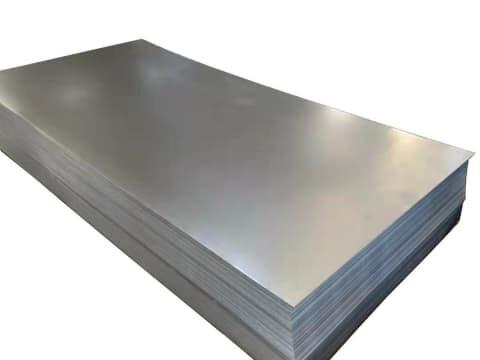
The Egyptian government has unveiled a new incentive package aimed at accelerating domestic production of cold-rolled, galvanized, and coated (prepainted) sheet metal — critical feedstock for key sectors such as appliances, automotive, construction, and medical equipment. The initiative is part of a broader push to deepen local value chains, reduce import dependence, and bolster export competitiveness.
Deputy Prime Minister and Minister of Industry & Transport Kamel El-Wazir said the incentives were launched in coordination with the Ministerial Group for Industrial Development. The package aligns with presidential directives to cultivate strategic industries and fortify Egypt’s industrial base.
El-Wazir has repeatedly emphasized that Egypt faces persistent gaps in steel inputs such as galvanized sheets and coated steel, which hinder competitiveness in downstream manufacturing.
Earlier this month, he disclosed that the government has identified 28 strategic industries as priority sectors for localization and investment support — and sheet metal production is among them.
The incentive package is designed to shorten lead times, lower upfront costs, and reduce risk for investors. Key provisions include:
Preferential industrial land pricing, allocation priority and flexible payment terms—conditional on timely project execution.
Comprehensive concessional financing for working capital and capital expenditure (e.g. production lines).
24-hour issuance of operating licenses, subject to submitting complete documentation to the General Authority for Industrial Development.
Immediate access to essential utilities—electricity, gas, water, roads, telecoms—upon project approval.
Preferential sourcing rights: domestically produced sheet metal will receive priority in supplying government or national projects.
These measures, the ministry says, are intended to enhance product competitiveness, expand local manufacturing capacity, reduce costly steel and sheet imports, and increase Egypt’s industrial exports.
Sheet metal is a foundational material across many strategic value chains. The government highlights its use in:
Household appliances (refrigerators, washing machines, cookers, air conditioners, microwaves)
Automotive & transportation (body panels, bus/truck bodies, trailer chassis)
Furniture and fixtures (metal furniture, office and home furnishings)
Medical and hospital equipment (beds, medical refrigerators, trolleys)
Agricultural machinery (tractors, harvesters, greenhouse frames)
Metal packaging (cans, containers)
Construction & infrastructure (roofing sheets, structural components, cladding).
By nurturing sheet metal output, the state aims to embed the “feeder” industries underpinning broader industrial ambitions — for example, automotive, household appliances, construction, and medical manufacturing.
This incentive package comes amid increasing focus on industrial self-reliance and import substitution. Egypt is actively promoting localization in sectors such as steel, automotive components, and machinery, in order to reduce import bills and reinforce resilience.
In parallel, the government has recently offered 1,386 fully serviced industrial plots across 23 governorates, totaling 6.8 million sqm, with favorable utility and infrastructure provisions to attract investment broadly.
Under Egypt’s 2025 Investment Climate Statement, the state has also formalized preferential tax and financial incentives for targeted industries that qualify under new decree rules.
In the auto sector, authorities continue to expand requirements for local value-added content, nudging manufacturers to source components like sheet metal from domestic suppliers.
Moreover, the Ministry is developing a national automotive localization database to map demand and encourage supply chain alignment.
To succeed, the scheme must overcome constraints in raw material supply (e.g. steel billet availability), energy costs, logistical bottlenecks, and the ability to mobilize capital. Ensuring that licensing, land, and utility promises are delivered in practice will be crucial to investor confidence.
If executed effectively, this push could catalyze job creation, deepen industrial integration, and position Egypt as a competitive regional hub — consistent with the state vision of “Made in Egypt … for Quality and Leadership.”