Egypt and Tunisia signed eight memoranda of understanding (MoUs) last Thursday, aiming to double trade flows and deepen cooperation across health, trade, social development, and diplomatic training.
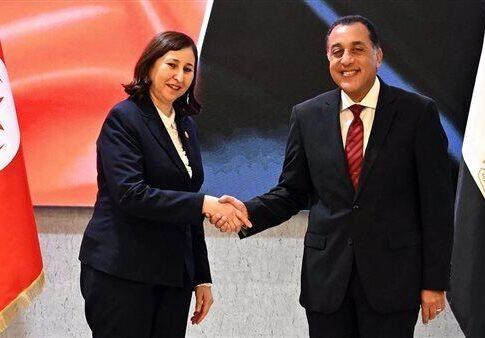
The agreements were concluded during the 18th session of the Egyptian–Tunisian Joint Higher Committee, co-chaired by Egyptian Prime Minister Mostafa Madbouly and his Tunisian counterpart Sara Al-Zaafrani, held in Cairo’s New Administrative Capital.
Under the new accords, the two governments will cooperate in health and medical sciences, support for small and medium-sized enterprises, social affairs, and consumer protection. Two executive programmes for youth and sports covering 2026–2027 were also signed, alongside an agreement linking Egypt’s Institute for Diplomatic Studies with Tunisia’s International Diplomatic Academy.
Officials said the measures aim to translate political goodwill into concrete outcomes. “This is a comprehensive package that touches citizens’ daily lives while also boosting trade and investment,” one Egyptian government source said.
A central plank of the discussions was trade. Cairo and Tunis pledged to double bilateral trade volumes to $1 billion within two years, up from around $500 million currently. Egyptian exports to Tunisia rose 15.4% in 2024 to $434.5 million, according to official data, underscoring what both sides see as untapped potential.
Analysts say achieving the $1 billion target will require removing barriers, harmonizing standards, and improving logistics. “The ambition is realistic but will depend on smoother customs procedures and private-sector engagement,” said a Tunis-based trade expert.
The session also underscored the institutional depth of the relationship. Madbouly and Al-Zaafrani signed the minutes of the Joint Higher Committee, the main bilateral mechanism established in the mid-1980s to coordinate cooperation in trade, investment, tourism and culture.
Egypt and Tunisia have signed multiple cooperation documents in past sessions, but implementation has often been slow. This year’s agreements, structured as sector-specific executive programmes, are intended to ensure clearer timetables and accountability.
The two governments are expected to align their partnership with regional frameworks such as the African Continental Free Trade Area and the Greater Arab Free Trade Area, expanding access to wider markets. Both sides also see opportunities in MSME development, with Tunisia’s experience in technology start-ups and Egypt’s strength in manufacturing and logistics.
Still, challenges loom. Tunisia is managing fiscal and political strains, while Egypt is coping with currency pressures and debt service obligations. Execution will depend on political stability, administrative capacity, and investment flows.
Even so, the agreements were welcomed as a timely step to bolster bilateral resilience. “In an uncertain regional environment, this partnership provides a buffer and opens new economic frontiers,” one Egyptian economic analyst said.