
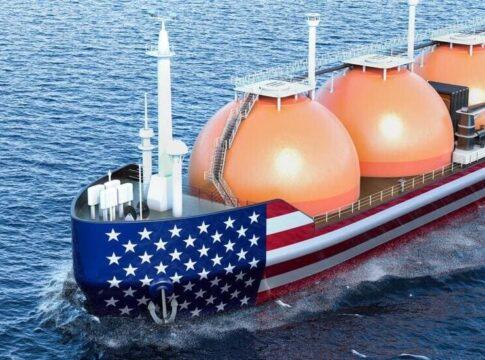
The U.S. President Donald Trump’s sweeping set of tariffs on 70 global trading partners has triggered broad market sell offs while securing strategic wins for American LNG exporters through parallel bilateral agreements.
The new duties, ranging from 10% to 41%, include additional 40% penalties for goods re-routed through third countries. While Canada faced immediate hikes to 35%, others, including the EU, South Korea, Japan, and Vietnam, were granted a seven-day delay—a tactical move aimed at fast-tracking trade concessions. “This approach mixes hardline tariffs with quiet side deals—especially in sectors the U.S. wants to lead, like energy,” said Wendy Cutler, VP at Asia Society Policy Institute.
The US Markets Reaction though reflected a down turn with S&P 500: -1.6%, Nasdaq Composite: -2% and FTSE 100 and Hang Seng: also down, as global investors priced in heightened volatility and inflation risks. The downturn was compounded by U.S. labor market data, showing July job growth missed expectations and unemployment rose to 4.2%, adding to pressure on the Fed, which held rates steady this week.
Behind the tariff theatrics, U.S. negotiators struck expanded LNG export terms with both the EU and South Korea. These deals open the door for long-term contracts involving Cheniere Energy, Venture Global, and Tellurian, targeting new European terminals in Poland, Germany, and Croatia. “Energy access was a sweetener in these negotiations,” said Mark Weston, senior fellow at the Center for Strategic Energy Policy. “Trump is leveraging U.S. gas dominance to reinforce political influence.”
South Korea agreed to raise its annual U.S. LNG import cap by 25%, according to sources familiar with the talks. The EU deal includes regulatory fast-tracks for U.S. energy investments in member states.
The White House is reportedly using tariffs to pressure Brazil over the trial of former President Bolsonaro and Canada over its UN stance on Palestinian recognition. While China was excluded from this round, talks remain ongoing to extend a temporary truce after both sides de-escalated earlier tit-for-tat duties.
“Energy is the backchannel in this geopolitical chess game,” said Carla Henderson, former USTR advisor. “U.S. LNG is no longer just a commodity—it’s a diplomatic asset.”
Investors are bracing for further volatility. While the administration has floated a “tariff dividend” for U.S. consumers, inflation risks and retaliatory threats loom. Still, U.S. LNG exports appear to be the unspoken winners, gaining secure access to strategic markets amid a broader trade shake-up.
Yet, Will the final tariff structures be concluded by the 7th of August or is the US still going to go for another spin of deals, further maintaining the current global economic uncertainty status?