
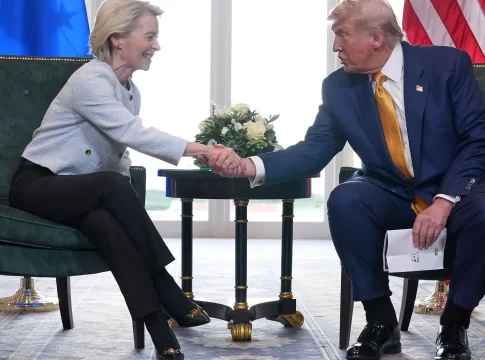
The agreement establishes a baseline 15 percent levy on EU exports to the United States, a reduction from the current 25 percent tariff on automobiles and other significant goods. This move aligns with the tariff level secured by Japan and marks a significant shift from the previous tariffs imposed on EU goods.
“We have reached a deal. It’s a good deal for everybody,” President Trump declared, emphasizing the economic benefits for both parties. Additionally, the EU has committed to purchasing $750 billion worth of energy from the US and making $600 billion in further investments.
Von der Leyen highlighted the importance of stability and predictability for businesses across the Atlantic. “It will bring stability. It will bring predictability. That’s very important for our businesses on both sides of the Atlantic,” she stated, reinforcing the strategic importance of the deal for the EU’s 27 member states.
However, the agreement has not met all EU expectations. The bloc had aimed for tariff exemptions for critical sectors, including pharmaceuticals and steel, but Trump reiterated a commitment to supporting domestic production. “We have to have them built, made in the United States,” Trump said, dismissing the possibility of a compromise on imported pharmaceuticals and steel.
The deal represents a significant step in resolving ongoing trade tensions, but it also underscores the challenges that remain. Dr. Laura Thompson, a trade expert at the London School of Economics, commented, “While this agreement prevents immediate escalation, the EU must navigate the complexities of meeting its economic goals amidst these new terms.”
This development comes as Trump continues to reshape US trade policies, with the August 1 deadline looming over other countries. US Commerce Secretary Howard Lutnick emphasized the firm nature of this deadline, stating, “There will be no extensions, no more grace periods.”
With EU ambassadors being briefed and set to reconvene following this agreement, the focus now shifts to the member states’ approval and the potential implications for global trade dynamics. As both sides celebrate a temporary reprieve, the broader implications of this deal will unfold in the coming months, influencing trade relations worldwide.