
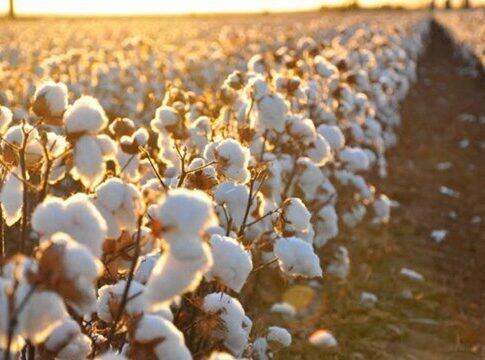
Egypt has successfully cultivated cotton for the first time in a desert environment, completing field trials in El Tor, South Sinai, that demonstrate the country’s strides in agricultural innovation and land reclamation.
Agriculture Minister Alaa Farouk lauded the achievement, praising researchers and experts at the Agriculture Research Centre and Cotton Research Institute for translating laboratory research into real-world farming success in the harsh desert climate. The initiative utilized modern irrigation systems and optimized fertilization techniques to produce viable and high-quality cotton under extreme environmental conditions.
Dr. Adel Abdel Azim, Head of the Agricultural Research Centre, noted the project tested six genotypes—including established varieties like Super Giza 86, 94, and 97, alongside three experimental lines. He highlighted that thanks to South Sinai’s high temperatures, the first harvest was achieved just 127 days after planting, a significantly accelerated timeline compared to typical cotton harvest cycles.
This milestone underscores Egypt’s growing capacity to develop drought-, salinity-, and heat-resistant crop varieties—critical advancements in the face of escalating climate challenges. Plans are already underway to replicate this approach in other governorates, coupled with training programs to equip farmers with cutting-edge irrigation and cultivation techniques.
The success of cultivating cotton in South Sinai holds broader significance for Egypt’s long-term development strategy. The breakthrough aligns with national efforts to combat desertification, reclaim barren lands, and extend agricultural activity beyond the fertile Nile valleys. By unlocking the potential of previously unproductive land, Egypt stands to significantly boost its agricultural output, create rural employment opportunities, and increase foreign exchange earnings from high-quality cotton—long considered the country’s “white gold.” Moreover, the El Tor pilot project serves as a pioneering model for climate-resilient agriculture, demonstrating that with modern irrigation, soil treatment, and scientific research, desert environments can be transformed into productive farmlands. If replicated, this innovation could position Egypt as a regional leader in sustainable desert farming while strengthening food security and supply chains across arid zones.
Building on this success, experts highlight that nearly 97% of Egypt’s territory is desert, much of which could be harnessed for agricultural expansion through similar methods. Large-scale implementation would require significant investment in infrastructure—particularly in irrigation networks, renewable-powered water desalination, and logistics—but early estimates suggest that returns could be substantial. According to agricultural economists, every $1 billion invested in desert reclamation and cotton cultivation could generate annual export revenues of $1.5–2 billion, driven by global demand for Egyptian long-staple cotton, while creating tens of thousands of jobs across farming, processing, and logistics. If efficiently scaled, the initiative could transform vast desert areas into productive zones, reduce Egypt’s reliance on imported raw materials, and position the country as a global hub for sustainable cotton production.