
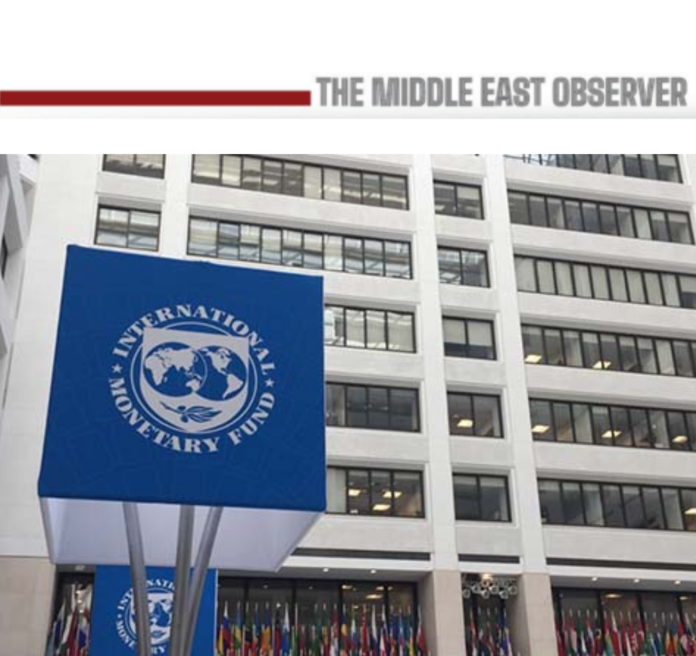
Egypt is projected to remain Africa’s second-largest economy in 2026, underscoring the country’s improving macroeconomic stability after more than two years of comprehensive economic reforms and signalling growing confidence among international investors despite a volatile global environment.
According to the International Monetary Fund’s latest World Economic Outlook database, Egypt’s nominal gross domestic product (GDP) is forecast to reach approximately US$430 billion this year, maintaining its position behind only South Africa, whose economy is projected at around US$480 billion. Egypt is also expected to remain comfortably ahead of Nigeria, with an estimated GDP of US$377 billion, and Algeria at US$317 billion, reinforcing its position among Africa’s leading economic powers.
| Africa’s Largest Economies – IMF 2026 Projection | Nominal GDP (US$ bn) |
|---|---|
| South Africa | 480 |
| Egypt | 430 |
| Nigeria | 377 |
| Algeria | 317 |
While the ranking itself is symbolic, economists view it as evidence that Egypt’s prolonged macroeconomic adjustment is beginning to yield measurable results. The country’s economic stabilisation has been driven by exchange-rate liberalisation, tighter monetary and fiscal policies, structural reforms and renewed efforts to expand private-sector participation under the IMF-supported reform programme.
Importantly, the increase in nominal GDP does not solely reflect stronger economic activity. It also captures the recovery in the US dollar value of Egypt’s economy following exchange-rate reforms, easing inflationary pressures and improved foreign exchange liquidity. Together with higher real economic growth, these developments have strengthened the country’s overall macroeconomic profile and enhanced investor confidence.
The IMF’s 46-month Extended Fund Facility (EFF) has become the principal policy framework guiding Egypt’s economic transformation. Since the programme was expanded in 2024, it has linked financial support to reforms aimed at restoring exchange-rate flexibility, strengthening fiscal sustainability, improving the business climate and encouraging greater private-sector investment. Earlier this year, the Fund completed its fifth and sixth programme reviews, acknowledging continued progress while emphasising that reform momentum must be maintained through the programme’s conclusion in December 2026.
Recent macroeconomic indicators suggest that the reform agenda is beginning to deliver tangible improvements. Inflation, which exceeded 38% during the peak of Egypt’s adjustment period, has declined to around 11.9%, reducing pressure on households and businesses while improving the outlook for investment and economic activity. At the same time, stronger tourism revenues, resilient foreign direct investment, significant Gulf-backed capital inflows, recovering workers’ remittances and improved foreign exchange availability have collectively reinforced financial stability and strengthened external accounts.
The improvement is particularly noteworthy given the challenging external environment. While tourism has reached record levels and investment inflows have remained robust, Egypt continues to contend with lower-than-historical revenues from the Suez Canal as Red Sea security disruptions have diverted international shipping routes. The resilience of broader foreign currency inflows has therefore played an increasingly important role in offsetting these external pressures.
Egypt’s economic performance also stands out against a diverse continental backdrop. While several African economies have experienced slower nominal expansion amid softer commodity prices, currency volatility and weaker external demand, Egypt has benefited from macroeconomic stabilisation, stronger capital inflows and a more diversified economic base. These factors have enabled it to preserve its position among Africa’s largest economies despite an increasingly uncertain global outlook.
Nevertheless, important challenges remain. Public debt levels continue to require careful management, financing costs remain elevated and sustaining higher growth will increasingly depend on accelerating private-sector investment, expanding export capacity, raising industrial productivity and generating sufficient employment opportunities for Egypt’s rapidly growing population. Preserving exchange-rate flexibility and maintaining fiscal discipline are also expected to remain central to long-term macroeconomic stability.
Beyond continental rankings, Egypt’s economic trajectory carries broader strategic significance. As one of Africa’s largest consumer markets and a gateway linking Africa, the Middle East and Europe, sustained economic reform could further strengthen the country’s role as a regional manufacturing, logistics, energy and investment hub. Continued progress would not only enhance domestic growth prospects but also reinforce Egypt’s importance within regional supply chains and cross-border investment flows.
Retaining Africa’s second-largest economy ranking is an important milestone, but the more demanding test lies ahead. The next phase of Egypt’s economic transformation will depend on converting macroeconomic stabilisation into sustained, private-sector-led growth capable of boosting productivity, expanding exports and delivering higher living standards. Ultimately, the country’s long-term success will be measured not by the size of its economy alone, but by its ability to build a more competitive, resilient and inclusive economic model capable of sustaining growth well beyond the current reform cycle.
Related news:
Egypt’s IT Market to Triple by 2031: The Unseen Drivers of Egypt’s Digital Economy
Joint Satellite Project Strengthens Saudi-Egyptian Push into Space Economy
Read also:
Engineering Export Excellence Awards Highlight Egypt’s Shift Towards Smarter Manufacturing
Rolls-Royce Bets on Egypt as Gateway to North Africa’s Emerging Luxury Market