CAIRO — Egypt and Uzbekistan are exploring the establishment of industrial investment zones focused on buses, pharmaceuticals, textiles and ready-made garments, as Cairo seeks to attract Central Asian capital and strengthen its role as a regional manufacturing and export hub.
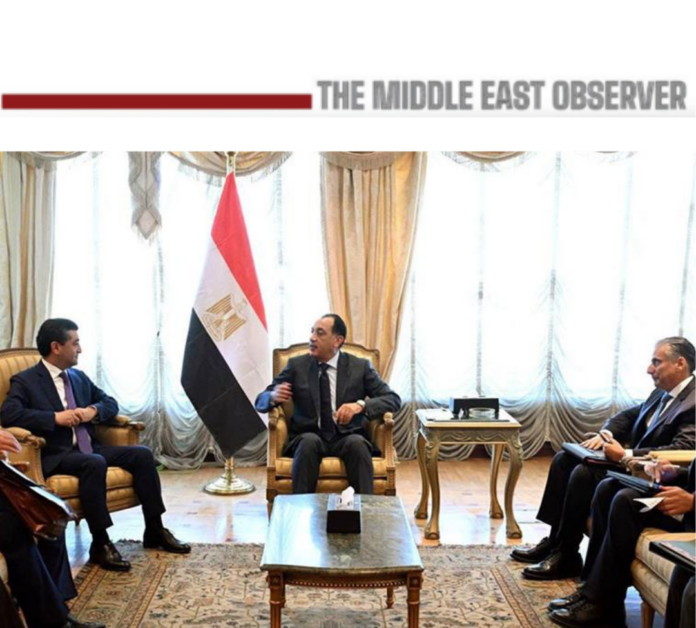
Egyptian Minister of Investment and Foreign Trade Mohamed Farid Saleh met Uzbek Foreign Minister Bakhtiyor Saidov in Cairo to discuss expanding trade and investment cooperation, including potential partnerships in medical supplies, bus and tractor manufacturing, textiles, garments and capital-market investment.
The talks come as bilateral economic ties continue to gain momentum. According to Trade Map data, trade between Egypt and Uzbekistan stood at approximately $36 million in 2023. While the volume remains modest compared with Egypt’s major trading partners, both governments have identified significant opportunities to expand cooperation in manufacturing, pharmaceuticals, agriculture and industrial production. Uzbek sources have reported the presence of Egyptian-owned enterprises operating in Uzbekistan across sectors including food production, geological exploration and water infrastructure.
The proposed investment-zone model reflects Egypt’s efforts to convert political engagement into tangible industrial projects. Officials view such zones as a mechanism to localise production, attract foreign direct investment, integrate supply chains and create export-oriented manufacturing platforms capable of serving regional and international markets.
Farid said Egypt was committed to attracting Uzbek investment and helping companies benefit from the country’s strategic location, expanding industrial base and extensive network of trade agreements. Egypt’s trade framework provides preferential access to Arab, African and European markets through agreements including GAFTA, COMESA, the Egypt-EU Association Agreement, EFTA, MERCOSUR and the Qualifying Industrial Zones arrangement.
For Uzbek manufacturers, Egypt offers a potential gateway to more than a billion consumers across multiple regions. Access to African markets through COMESA and the African Continental Free Trade Area (AfCFTA), combined with preferential arrangements with Arab countries and industrial free access to European markets under the Egypt-EU Association Agreement, could enhance the competitiveness of Uzbek products manufactured in Egypt.
Saidov said Uzbek companies were interested in exploring opportunities in the Egyptian market, citing Egypt’s strategic location and access to regional markets as key advantages. Discussions also covered cooperation between investment institutions, sovereign funds and economic zones, as well as mechanisms to strengthen direct engagement between business communities in both countries.
The renewed engagement follows a broader expansion of Egypt-Uzbekistan economic relations. Momentum accelerated following Uzbek President Shavkat Mirziyoyev’s visit to Egypt in 2023, which produced agreements in sectors including pharmaceuticals, textiles, healthcare and energy. The two countries also revived their Joint Committee for Economic, Scientific and Technical Cooperation in 2024 after a 15-year hiatus, signalling a renewed commitment to strengthening bilateral economic ties.
Egypt’s outreach to Uzbekistan forms part of a broader strategy to diversify sources of foreign investment beyond traditional Gulf, European and Asian partners while positioning itself as a commercial bridge between Africa, the Middle East and emerging Eurasian markets. For Uzbekistan, deeper engagement with Egypt aligns with efforts to diversify external investments, expand industrial partnerships and secure access to new export destinations.
Although no investment values or implementation timelines were announced, the discussions underscore a shared ambition to move economic relations beyond conventional trade and towards long-term industrial cooperation. If translated into concrete projects, the proposed investment zones could help diversify Egypt’s foreign direct investment base, strengthen export-oriented manufacturing and establish new economic corridors linking North Africa with Central Asia at a time when both regions are seeking more resilient supply chains and broader market access.