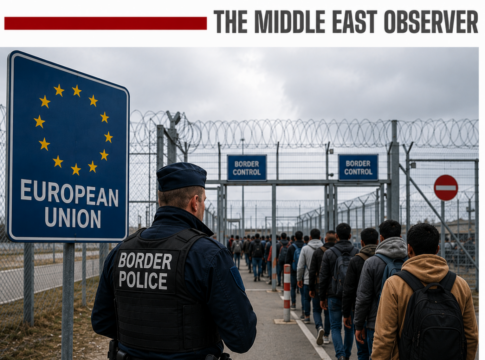
The European Union’s agreement on a new Return Regulation marks one of the most consequential shifts in migration policy in decades, reflecting a growing determination among European governments to tighten control over irregular migration. Reached on 1 June between negotiators from the European Parliament and the Council of the European Union, which represents the bloc’s 27 member states, the deal introduces tougher deportation rules, offshore return hubs and expanded enforcement powers in what supporters describe as a long-overdue effort to restore credibility to Europe’s migration system. Yet the legislation also exposes a deeper contradiction at the heart of Europe’s economic future: while policymakers seek stronger deportation powers and tougher border enforcement, many of the continent’s economies remain increasingly dependent on migrant workers to sustain growth, support public finances and preserve ageing welfare systems.
The political agreement, which still requires formal approval by both the European Parliament and EU member states before entering into force, forms a central pillar of the bloc’s broader migration and asylum reform agenda. Most provisions are expected to become operational within 12 months of formal adoption, reflecting pressure from member states seeking faster implementation of return decisions.
Among the most significant measures is the creation of so-called “return hubs” in third countries outside the European Union. The proposal represents a major departure from existing practice. Under current EU rules, migrants are generally returned either to their country of origin or to a country with which they have a demonstrable connection. The new framework would allow member states, through agreements with third countries, to transfer migrants to designated return facilities even where no prior link exists. The legislation also extends detention periods, increases re-entry bans, expands authorities’ powers to locate irregular migrants and introduces a European Return Order designed to facilitate recognition of deportation decisions across member states.
Supporters argue that the reforms are necessary to restore credibility to a migration system where enforcement has often fallen short. Fewer than one-third of migrants issued with return orders currently leave the European Union, a gap that policymakers say undermines public confidence in asylum and immigration frameworks.
For supporters, the legislation is ultimately about governance. They argue that public acceptance of legal migration depends on governments demonstrating that they can effectively manage irregular arrivals and enforce return decisions. Without that confidence, political support for broader migration policies may continue to erode.
Several governments, notably Italy, the Netherlands, Austria, Denmark and Greece, have in recent years advocated stronger return mechanisms and deeper cooperation with third countries as part of broader efforts to tighten migration management and improve enforcement of return decisions. Italy’s migrant-processing arrangements with Albania have frequently been cited by supporters as a possible template for future external return arrangements.
Opposition, however, has emerged from Green and left-wing lawmakers in the European Parliament, as well as human-rights organisations, refugee advocates and legal groups. Critics argue that the measures risk creating a more punitive migration regime while failing to address the structural economic realities driving labour demand across Europe.
Yet beneath the political debate lies a much larger economic challenge.
A Continent Growing Older
Europe is entering one of the most significant demographic transitions in its modern history. Across much of the continent, fertility rates remain below replacement levels while life expectancy continues to rise. As a result, the working-age population is shrinking even as the number of retirees grows.
The economic significance of the migration debate becomes clearer when viewed through Europe’s demographic outlook. Eurostat projections indicate that the share of people aged 65 and above is expected to rise from approximately 21% of the EU population today to nearly 30% by 2050, while the working-age population continues to contract in many member states.
At the same time, the old-age dependency ratio — measuring the number of retirees relative to the working-age population — is projected to rise from roughly 33% today to more than 50% by mid-century. In practical terms, Europe is moving from having roughly three working-age adults supporting every retiree to closer to two.
Importantly, migration has become one of the principal drivers of population growth across much of Europe. Eurostat data show that net migration has accounted for the vast majority of EU population growth in recent years, helping offset declining birth rates and labour-force contraction in several member states. By 2050, the number of people aged 65 and over in the European Union is projected to approach 130 million, underscoring the scale of the demographic transition confronting policymakers.
For governments already struggling with rising healthcare costs and mounting pension obligations, the implications are profound. Without stronger productivity growth, higher labour-force participation or sustained migration inflows, many European economies could face increasing pressure on public finances and long-term growth prospects.
Migration has therefore become more than a border issue. It is increasingly a question of fiscal sustainability.
The Labour Market Reality
The contradiction is already visible across Europe’s labour markets.
Agriculture, construction, logistics, hospitality, healthcare and elderly care services face persistent workforce shortages despite slowing economic growth in several member states. Employers increasingly report difficulties recruiting workers for both skilled and low-skilled positions.
Recent agreements such as Greece’s decision to recruit up to 5,000 Egyptian agricultural workers illustrate the dilemma confronting policymakers. While governments seek to strengthen deportation systems for irregular migrants, they are simultaneously expanding legal migration channels to address labour shortages and maintain economic output.
Industry estimates suggest Greece alone faces an agricultural labour shortfall of approximately 70,000 workers, underscoring the scale of the challenge confronting producers. Similar shortages are being reported across Southern Europe, where ageing populations and declining interest in seasonal agricultural employment have created structural workforce gaps.
The European Commission has identified labour shortages across dozens of occupations, ranging from healthcare professionals and engineers to construction workers, drivers and agricultural labourers. In many member states, migration has become one of the few factors helping offset demographic decline and sustain workforce growth.
For economists, these shortages are not merely labour-market challenges. They represent constraints on productivity, investment and long-term competitiveness.
The Pension Question
The migration debate is also becoming increasingly intertwined with the future of Europe’s social model.
European pension systems were largely built during periods of stronger demographic growth, when relatively large working-age populations supported smaller retired populations through payroll taxes and social contributions.
That balance is changing rapidly.
A shrinking workforce means fewer taxpayers supporting larger numbers of pensioners and healthcare beneficiaries. While migration alone cannot resolve Europe’s demographic challenges, economists generally view managed labour migration as one of the tools available to help stabilise the tax base, support social insurance systems and mitigate the economic effects of population ageing.
The question confronting policymakers is therefore not simply how many migrants Europe should admit, but how migration can be managed in a way that supports labour-market needs while maintaining public confidence in the system.
Why Critics Are Concerned
Opponents of the Return Regulation argue that the legislation focuses heavily on enforcement while failing to address Europe’s long-term demographic and economic realities.
Human-rights organisations, refugee advocates and several members of the European Parliament have criticised the proposed return hubs, warning that offshore processing risks creating legal grey zones where accountability and oversight become more difficult.
Critics have also expressed concern over expanded detention powers, longer entry bans and provisions allowing authorities greater powers to locate irregular migrants. Under the new framework, detention periods may be extended significantly beyond current rules, while automatic suspension of deportation orders during appeals would no longer apply in all cases.
Some advocacy groups argue that such measures risk discouraging vulnerable individuals from accessing healthcare, legal assistance and social services. Others contend that an excessive focus on deterrence may undermine Europe’s ability to attract the workers needed to sustain future growth, particularly as global competition for skilled labour intensifies.
The European Commission’s Safeguards
European institutions reject suggestions that stronger enforcement and economic migration are mutually exclusive.
The European Commission maintains that the Return Regulation is designed to improve the functioning of the migration system while preserving compliance with EU law, international refugee conventions and fundamental-rights protections.
Commission officials argue that effective return mechanisms are essential for maintaining the legitimacy of legal migration pathways. The EU continues to promote talent partnerships, labour-mobility agreements and targeted migration programmes aimed at addressing workforce shortages in key sectors.
Under this logic, stronger enforcement is intended not to replace legal migration but to coexist with it.
The Commission further insists that all return procedures must remain subject to judicial oversight, due process guarantees and the principle of non-refoulement, which prohibits returning individuals to countries where they face persecution, torture or serious harm. Unaccompanied minors remain exempt from transfer to return hubs, while courts retain authority to intervene in individual cases where fundamental-rights concerns arise.
Switzerland’s Parallel Debate
Switzerland illustrates the broader dilemma facing many advanced European economies.
Although outside the European Union, the country has experienced many of the same political pressures surrounding migration and asylum policy. Swiss lawmakers have recently debated tighter asylum procedures and stronger enforcement measures, reflecting growing public concern over migration levels.
At the same time, Switzerland remains heavily reliant on foreign labour. Migrant workers play a significant role in sectors ranging from healthcare and construction to advanced manufacturing and financial services. Foreign nationals account for roughly a quarter of Switzerland’s resident population, creating a recurring policy tension between demands for stricter migration controls and the economic requirements of employers operating in an ageing labour market.
Recent Swiss discussions concerning younger migrants have increasingly focused on integration, education and labour-market participation. The rationale is largely economic: younger migrants who successfully enter education and employment are more likely to become net contributors to public finances, helping support pension systems and reducing long-term welfare dependence.
The Strategic Choice Ahead
The new Return Regulation highlights a defining challenge for Europe in the decades ahead.
For supporters, the legislation restores credibility to migration governance and responds to growing public demands for stronger border management. For critics, it risks prioritising deterrence without adequately addressing the demographic and economic forces reshaping the continent.
The deeper issue extends beyond migration policy itself. Europe’s long-term prosperity will depend on its ability to maintain a sufficiently large and productive workforce capable of financing pensions, supporting healthcare systems and sustaining economic competitiveness.
As populations age and labour shortages become more pronounced, the debate is likely to shift from whether migration should be managed to how it can be managed in a manner that balances public confidence, economic necessity and fundamental rights. The outcome may determine not only the future direction of European migration policy, but also the sustainability of the continent’s labour force, pension systems and long-term economic competitiveness. For Europe, the challenge is no longer simply controlling migration flows; it is ensuring that migration policy aligns with the demographic and economic realities that will shape growth in the decades ahead.