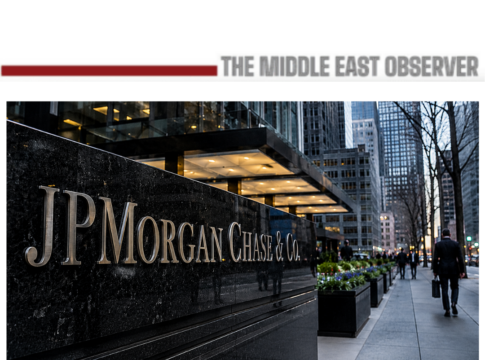
JPMorgan Chase has warned that the traditional investment strategy built around equities and bonds is becoming increasingly insufficient for protecting wealth amid rising geopolitical tensions in the Middle East and growing inflationary pressures linked to disruptions in global energy markets.
In a recent investment outlook, the bank argued that the long-established “60/40” portfolio model — traditionally based on allocating roughly 60% to stocks and 40% to bonds — is losing effectiveness as both asset classes have simultaneously come under pressure since the escalation of the Iran conflict and closure risks surrounding the Strait of Hormuz. JPMorgan stated that current global market shocks appear increasingly structural rather than temporary cyclical disturbances, requiring investors to rethink traditional wealth-preservation strategies.
The bank noted that consumer prices in the United States alone have risen by more than 25% throughout the 2020s, while core fixed-income investments generated returns of only around 5% during the same period, illustrating the growing difficulty of preserving purchasing power through conventional bond exposure under prolonged inflationary conditions.
According to JPMorgan, the ongoing geopolitical instability has accelerated a broader transition toward alternative and inflation-resilient asset classes capable of performing during periods when both equities and bonds weaken simultaneously. The bank therefore advised investors to expand exposure toward real assets, infrastructure, commodity-linked investments, and actively managed strategies designed to navigate volatile inflationary environments.
Infrastructure investments emerged among the sectors most strongly highlighted by the bank. JPMorgan pointed to growing opportunities in energy networks, transport corridors, ports, logistics hubs, electricity grids, telecommunications infrastructure, and data centers, arguing that such assets often benefit from long-term contracts and inflation-linked revenues that provide relatively stable cash flows during periods of economic uncertainty. The bank suggested that rising global spending on supply-chain security, energy resilience, and strategic infrastructure development could further strengthen the sector’s long-term investment attractiveness.
The report also emphasized commodity-linked equities as increasingly important within diversified portfolios. Companies operating in oil and gas, mining, industrial metals, fertilizers, agricultural commodities, and energy transportation may continue benefiting from elevated commodity prices driven by geopolitical instability and tighter global supply conditions. JPMorgan indicated that prolonged uncertainty surrounding Middle East energy routes and maritime trade corridors could continue supporting higher energy and raw-material prices over the medium term.
Real estate was similarly identified as a major inflation-resistant investment category, particularly logistics facilities, industrial warehouses, residential rental housing, hospitality assets, healthcare-related properties, and premium commercial real estate linked to sectors with structurally strong demand and recurring income streams. According to JPMorgan’s analysis, real assets such as infrastructure and real estate have historically generated annualized returns ranging between 8% and 12% across various inflationary cycles.
Beyond physical assets, the bank also encouraged greater exposure to active investment strategies and hedge funds, particularly macro and relative-value strategies that have historically performed better during periods of market stress. JPMorgan noted that some hedge-fund strategies were among the few investment categories capable of delivering positive returns during 2022, when aggressive monetary tightening and inflation shocks caused simultaneous declines in both global equity and bond markets.
Stephen Parker, Co-Head of Global Investment Strategy at JPMorgan, stated that investors increasingly require “a broader toolkit” capable of withstanding inflationary pressures and geopolitical uncertainty rather than relying solely on traditional market cycles.
Analysts nevertheless caution that alternative assets remain exposed to valuation pressures, liquidity constraints, and prolonged high-interest-rate environments, highlighting that diversification into real assets and active strategies requires disciplined risk management rather than simply replacing traditional portfolio structures.
As The Middle East Observer notes, JPMorgan’s assessment reflects a broader transformation taking place across global financial markets as geopolitical fragmentation, energy-security concerns, supply-chain competition, and persistent inflation gradually reshape long-standing investment assumptions. Increasingly, sectors such as infrastructure, commodities, logistics, and real assets are no longer viewed merely as supplementary portfolio components, but rather as strategic pillars within a new global investment environment shaped by heightened geopolitical volatility and structural economic uncertainty. In this emerging landscape, geopolitical resilience itself is increasingly becoming an investable strategic asset.