
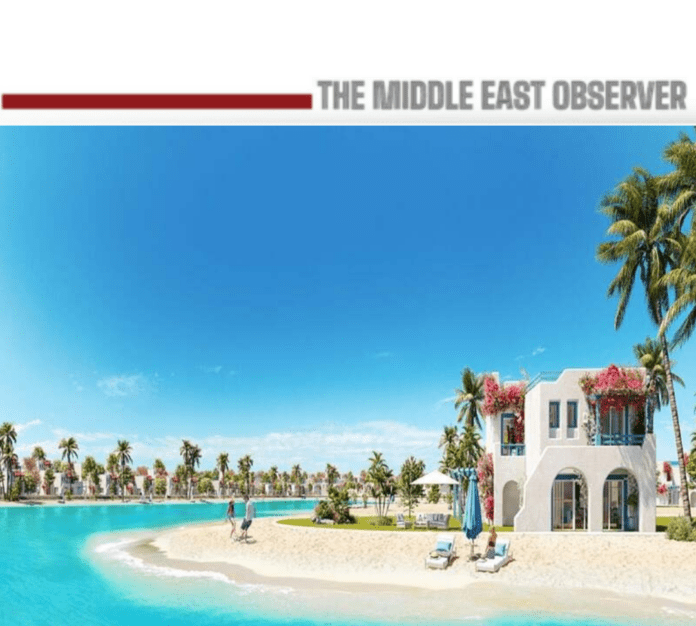
Egypt has reduced fees on real estate partnership projects along the North Coast by nearly 50% after revising the calculation method to apply to sellable built-up space rather than total land area, according to Asharq News citing government sources. The adjustment applies to projects approved before February 2024 and is expected to significantly ease cost pressures on developers by aligning fees with revenue-generating components.
Officials told Asharq News that the new model is based on the “built footprint,” which typically represents around half of total land area. In contrast, newer projects will continue to be charged on full land size at approximately EGP 1,000 per square metre, maintaining a stricter framework for future developments. Data from the same report indicate that 83 companies are subject to these fees, with developers required to pay 20% upfront and the remainder over five years at a 10% interest rate.
The policy shift comes amid a broader repositioning of Egypt’s North Coast as a major investment corridor, reinforced by landmark agreements such as the Ras El Hekma development led by ADQ. Widely reported by international financial media, the deal has reshaped expectations around land valuation and foreign direct investment inflows into Egypt’s North Coast.
Stretching roughly 500 kilometres from New Alamein to Sallum, the North Coast—encompassing key zones such as Ras El Hekma and Sidi Abdel Rahman—has become central to Egypt’s tourism, real estate, and infrastructure strategy.
The Middle East Observer views the reform as a calibrated policy adjustment rather than a broad concession, aimed at accelerating existing developments while preserving long-term state revenues. By linking fees to actual project yield while maintaining stricter terms for new allocations, Egypt is signalling a more dynamic and responsive investment framework designed to sustain momentum in a rapidly evolving regional capital landscape.
