
By : Ahmed Moawad

When wars erupt, global attention naturally gravitates toward the frontlines—missiles, military maneuvers, and geopolitical brinkmanship. Yet the true cost of conflict often unfolds far from the battlefield, in regions with no direct stake in the fighting but which bear its harshest consequences. Today, few places illustrate this more starkly than Somalia.
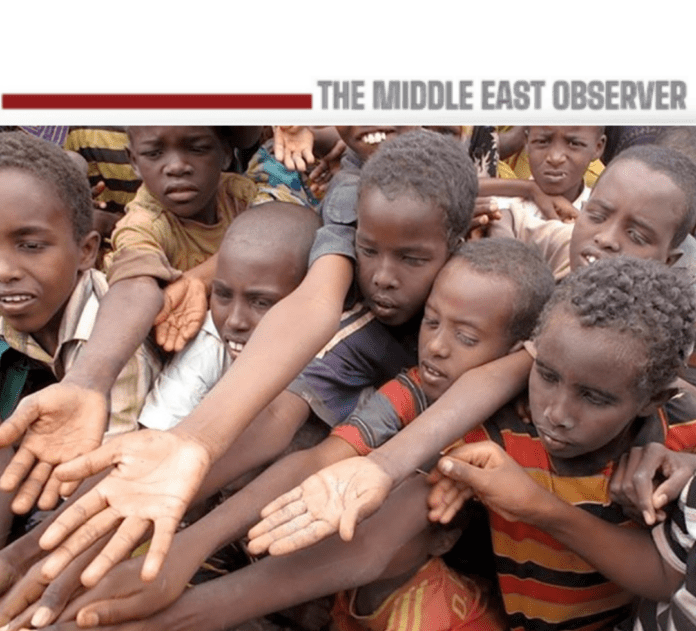
For Somalia’s children, the ongoing conflict involving Iran and its impact on Red Sea and Gulf shipping corridors is not a distant geopolitical episode—it is an immediate threat to survival.
Somalia is already on the brink. Nearly half a million children under the age of five suffer from severe acute malnutrition—the most lethal form of hunger, according to estimates by UNICEF and World Food Programme. Years of prolonged drought, economic fragility, and declining humanitarian support have created a perfect storm. The conflict linked to Iran has now added a devastating new dimension.
Disruptions to global shipping routes—particularly across the Red Sea and the Gulf—amid heightened regional tensions and rerouting of maritime traffic have significantly delayed the delivery of lifesaving supplies. Therapeutic milk and ready-to-use therapeutic food (RUTF), critical for treating malnourished children, are now arriving weeks later than before. What once required just over a month in transit has extended to more than two, according to humanitarian logistics updates from World Food Programme.
In humanitarian terms, such delays are not logistical setbacks—they are fatal.
Malnutrition does not allow for delay. A severely malnourished child can deteriorate rapidly without immediate intervention. Clinics across Somalia are increasingly forced into impossible decisions: ration limited supplies, prioritize certain cases, or turn patients away altogether.
According to the Integrated Food Security Phase Classification (IPC), more than 2 million Somalis are already in the “Emergency” phase—just one step short of famine. Tens of thousands of children have gone untreated due to shortages, a figure that could more than double if current funding and supply constraints persist, as warned by UNICEF.
What makes this crisis particularly alarming is its relative invisibility in global discourse. The suffering of Somali children is not solely the result of domestic conditions, but of an interconnected global system in which conflicts in one region trigger cascading consequences elsewhere.
When shipping lanes are disrupted or rerouted due to conflict, when fuel prices surge, and when aid budgets are reallocated toward military priorities, countries like Somalia absorb the shock.
This is the harsh reality of globalization: vulnerability travels faster than aid.
The situation raises urgent ethical questions. How should the international community respond when geopolitical conflict indirectly drives millions toward starvation? Can major powers justify escalation when its consequences include the suffering of children thousands of miles away?
Humanitarian organizations continue to respond, but they are overstretched and underfunded. Without immediate international attention and coordinated intervention, Somalia risks sliding from crisis into catastrophe, with funding gaps for food assistance programmes widening in 2026, according to World Food Programme reports.
The war involving Iran may be fought through missiles and naval maneuvers, but its consequences are measured in empty stomachs and silent clinics across Somalia.
For Somalia’s children, this is not about politics or strategy. It is about whether food arrives in time, whether treatment is available, and ultimately, whether they live or die.
For them, this war is not distant—it is existential.
