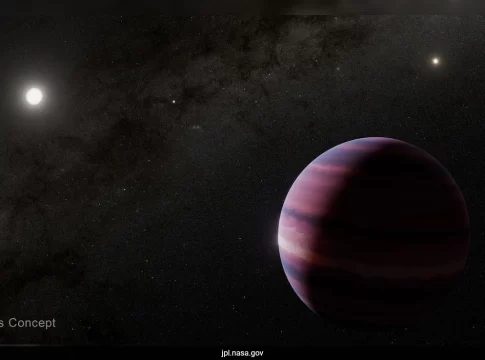
Astronomers using the James Webb Space Telescope (JWST) have spotted what could be a potentially habitable planet orbiting Alpha Centauri A, the nearest Sun-like star just over four light years away. The candidate world, Alpha Centauri Ab, appears to lie in the star’s habitable zone, raising hopes it could sustain liquid water and possibly life.
If confirmed, this would be the first planet of its kind discovered around our closest stellar neighbour—a breakthrough for exoplanet research. Early data suggest it may be a Saturn-sized gas giant on an elliptical orbit, challenging existing models of how planets form and survive in such binary star systems.
Scientists say the finding highlights JWST’s unprecedented imaging power, opening new frontiers in the search for Earth-like worlds. “Its very existence would mark a milestone in exoplanet science,” said NASA’s Charles Beichman, noting it could become a benchmark target for future space telescopes.