
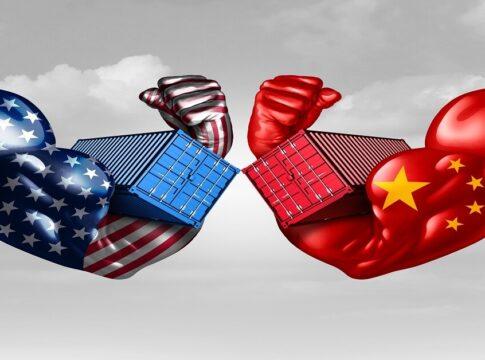
Washington and Beijing this week announced a narrowly crafted deal designed to de-escalate a mounting trade conflict between the world’s two largest economies. Under the agreement, China will resume exports of key automotive semiconductors, pause for one year its latest rare-earth export controls, recommit to large U.S. soybean purchases and curb shipments of fentanyl-precursor chemicals, in exchange for the U.S. trimming certain tariffs and delaying new export-licensing restrictions.
On the semiconductor front, China has agreed to allow shipments from the China-based operations of Dutch-owned chipmaker Nexperia to resume, alleviating a bottleneck in inexpensive power-transistor and diode chips used across the global auto industry. Automakers had warned of potential shutdowns without relief.
In the minerals sector, China will pause for 12 months the tighter export-licensing regime introduced in October that targeted rare earths, magnets, gallium and other strategic inputs. While the pause brings relief, it does not represent a full rollback of earlier controls introduced in April.
Agriculture also features in the pact: Beijing has committed to purchase 12 million metric tonnes of U.S. soybeans by January and 25 million tonnes annually for the next three years—restoring volumes near pre-dispute levels. Meanwhile the U.S. will reduce its effective tariff burden on Chinese imports by halving certain fentanyl-related duties and suspending the implementation of new export controls.
While the deal offers a much-needed breathing space for global supply chains—easing cost pressures in autos, clean tech, and agriculture—analysts warn that the truce is fragile and fleeting. U.S. Treasury Secretary Scott Bessent described China as an “unreliable partner,” while stressing that Washington still seeks to avoid full economic decoupling as the trans-Pacific relationship enters a cautious new phase.
For the wider world, the agreement restores a measure of predictability to sectors long caught in the crossfire—from semiconductors and rare earths to food commodities—but only temporarily. The ceasefire runs for about a year, not the five-year horizon businesses say is essential for real investment security and economic stability.
Governments, meanwhile, continue to run their supply chains hand-to-mouth—plugging gaps, chasing licenses, and firefighting shortages. The real challenge is to move from survival to structure: diversify refining and chip-packaging capacity beyond China, secure multi-year supply deals, and rebuild buffers that can absorb the next shock.
Ultimately, this truce delivers breathing space, not peace. Without a sustained five-year framework to anchor trade and investment, global markets will remain reactive, volatile, and just one policy turn away from the next crisis.