
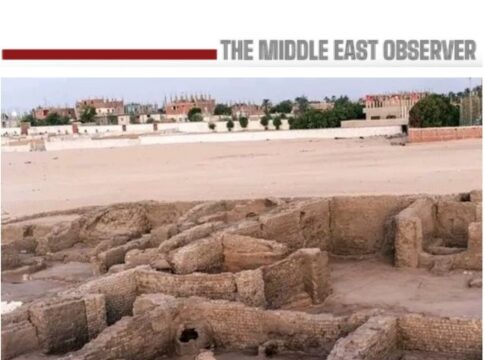
CAIRO — A joint Egyptian–French archaeological mission has uncovered remains of an 18th-century mud-brick residential settlement at the Sheikh al-Arab Hammam site in the village of al-Arki, Qena Governorate, according to Egypt’s Ministry of Tourism and Antiquities.
The excavations revealed six houses with attached service buildings and traces of nearby industrial activity, offering new insights into daily life during the era of Sheikh al-Arab Hammam, a prominent Upper Egyptian leader in the late Ottoman period.
Beneath the settlement, archaeologists also discovered an extension of a Byzantine-era Coptic cemetery, featuring two burial styles: direct ground burials and tombs defined by mud-brick walls.
Artifacts recovered include bronze coins, pottery fragments, children’s toys, jewelry, and Coptic-style textiles, shedding light on settlement patterns and funerary practices in Upper Egypt across centuries.
