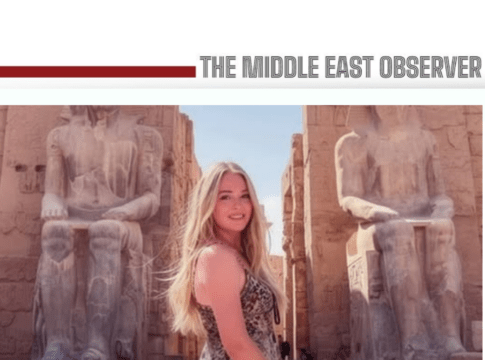
When Tiffany Trump, daughter of US President Donald Trump, paid a private visit to Luxor last week—touring the Valley of the Kings, Karnak Temple, and other ancient landmarks—the trip was meant as a quiet cultural stop. Instead, it triggered one of the internet’s more imaginative episodes: the sudden “discovery” that the Trump family might, somehow, be descended from Egypt’s legendary pharaoh Ramses.
The theory did not rely on archaeology, genetics, or history. It relied on something far more powerful: wordplay. Social media users gleefully zoomed in on the last letters of the Trump name, isolated “Ram,” and leapt several thousand years back in time to the Ramesside dynasty. From there, the memes wrote themselves.
Within hours, jokes circulated about “Trump the Pharaoh,” “Make the Nile Great Again,” and secret royal bloodlines hidden beneath modern politics. Some posts even mockingly suggested that the visit itself was less tourism and more a homecoming.
Reality, of course, is far less dramatic. Tiffany Trump’s visit was a private, tourist trip, widely covered by Egyptian and regional media, with no official statements, ancestral revelations, or genealogical announcements. Historians, for their part, remain unmoved. Ramses II’s family tree is well documented—and stops several millennia short of Manhattan.
But facts have never stood in the way of a good internet story. What the episode really shows is the enduring magnetism of ancient Egypt. A walk through Luxor has a way of making even modern power feel temporary—and of inspiring playful fantasies about who might secretly belong to history’s greatest civilisation.