The recently uncovered tomb of Thutmose II, located on the West Bank of Luxor, has been named among the world’s top ten archaeological discoveries of 2025 by Archaeology magazine, one of the most authoritative journals in the field.
The discovery, officially announced by the Ministry of Tourism and Antiquities in February, has drawn international attention for its exceptional historical significance. It marks the first identification of a royal tomb from Egypt’s 18th Dynasty since the discovery of Tutankhamun’s tomb in 1922, representing a major milestone in modern Egyptology.
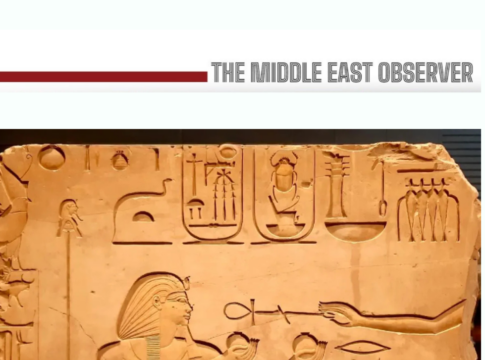
Reflecting the global impact of the find, one of the inscriptions uncovered inside the tomb was prominently featured on the cover of Archaeology magazine’s January–February 2026 issue, underscoring the scholarly importance of the discovery beyond Egypt.
Mohamed Ismail Khaled, Secretary-General of the Supreme Council of Antiquities, described the international recognition as a renewed affirmation of the outstanding value of Egypt’s archaeological heritage. He said the discovery reinforces Egypt’s leading academic position in archaeological research and highlights the results of sustained cooperation between Egyptian and international missions.
The tomb was discovered by a joint Egyptian–British archaeological mission, representing the Supreme Council of Antiquities and the New Kingdom Research Foundation, during excavation work at Tomb C4 in the Theban Mountain on Luxor’s West Bank.
At the early stages of excavation, researchers initially believed the tomb belonged to a royal consort from the Thutmoside period, due to its proximity to the tombs of the wives of Thutmose III and to the tomb of Hatshepsut. Hatshepsut’s tomb had originally been prepared for her as a royal wife before she ascended the throne as king and was later buried in the Valley of the Kings. Continued excavation, however, revealed decisive archaeological evidence that conclusively identified the tomb’s owner as King Thutmose II.
Among the most significant discoveries were fragments of plaster bearing traces of blue inscriptions and yellow stars symbolizing the night sky, along with decorative elements and passages from the Book of Imyduat, a key funerary text traditionally associated with royal burials. Architecturally, the tomb features a relatively simple layout that scholars consider an early prototype for the royal tomb designs later adopted by several kings of the Eighteenth Dynasty.
Archaeologists say the find adds a crucial chapter to the understanding of Egypt’s New Kingdom, offering new insights into royal burial practices during a formative period of ancient Egyptian history. More broadly, the discovery reaffirms Egypt’s enduring role as a focal point of global archaeological research, continuing to captivate both the scientific community and the wider public worldwide.