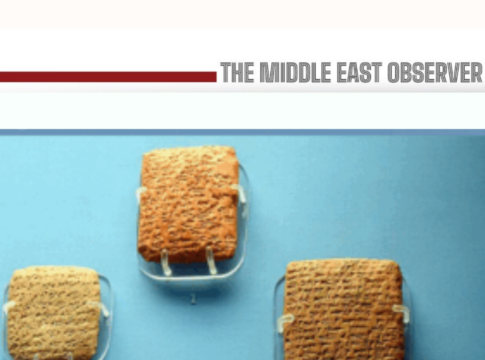
When the first Amarna tablets surfaced from the sands of Tell el-Amarna, scholars doubted they were real. Why would Egyptian archives contain clay tablets — not papyrus — written in Akkadian cuneiform, the script of faraway Assyria and Babylon?
But the tablets were genuine. And their content upended everything historians thought they knew about Egypt’s global standing.
Dating back more than 3,300 years, the 382 Amarna Letters reveal a bustling international system in which Egypt stood at the center of a diplomatic world stretching from the Mediterranean to Mesopotamia. The messages came from vassal princes begging for support, from rival kings proposing marriage alliances, and from powerful rulers demanding direct audiences with the pharaoh.
Written during the reign of Akhenaten, the pharaoh who built a new capital at Amarna and revolutionized Egyptian religion, the tablets show an empire tightly connected to its neighbors through treaties, trade, and constant negotiation.
One anxious vassal from Tyre wrote:
“I fall at your feet seven times and seven times… The whole land is afraid of the king, my lord’s troops.”
Others, like Assyrian king Ashur-uballit I, spoke as equals:
“Do not delay my messenger… He must see your condition and the condition of your land.”
According to the Metropolitan Museum of Art, the letters were not only administrative records but ritual objects — read aloud in court ceremonies and kept as diplomatic keepsakes. Their survival offers a rare window into a world governed by rules, protocol, and a shared political language.
More than a trove of correspondence, the Amarna Letters reveal an Egypt fully embedded in a sophisticated geopolitical network. They challenge the myth of a solitary pharaonic kingdom and instead present a nation commanding respect, negotiating alliances, and shaping an interconnected ancient world.