
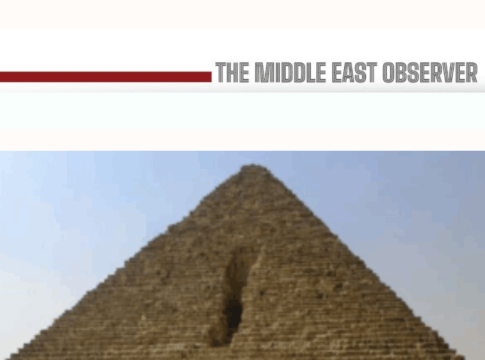
A scientific team from Cairo University and the Technical University of Munich has identified two previously unknown air-filled voids behind the eastern façade of the Pyramid of Menkaure—raising the possibility of a hidden entrance within one of Giza’s oldest wonders.
The discovery was made using advanced non-invasive scanning tools, including radar, ultrasound, and electrical resistivity tomography, allowing researchers to peer beneath the polished granite exterior without disturbing any ancient stones. The voids were found just behind a rare, finely finished section of the façade, a clue that supports a long-standing theory first proposed in 2019 that the pyramid may contain a second entrance.
“We’re now able to draw very precise conclusions about internal structures without damaging the monument,” said Professor Christian Grosse of TUM, noting that the findings bring researchers “a big step closer” to confirming the hypothesis.
Standing at around 200 feet tall, the Pyramid of Menkaure dates back more than 4,500 years and is believed to house the tomb of the Fourth Dynasty king. Its original sarcophagus was tragically lost at sea in 1838 while being transported to the British Museum.
While the new voids do not yet confirm the presence of a true passageway, they offer one of the most intriguing leads in decades. Further scanning and non-destructive exploration are expected, promising fresh insights into one of Egypt’s most captivating monuments.
Visitors to Giza may soon be looking at the Menkaure Pyramid with renewed curiosity—its ancient stones perhaps guarding one more secret yet to be revealed.