
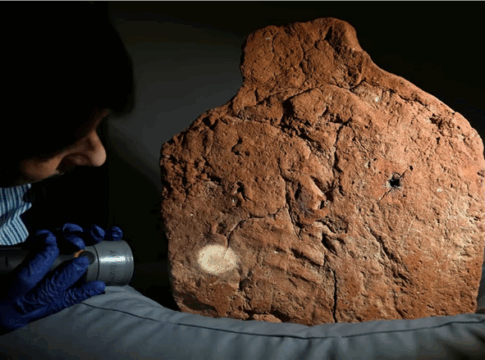
The handprint, described as “rare and exciting” by Helen Strudwick, a senior Egyptologist at the museum, was found on the base of a “soul house.” These clay models, shaped like buildings, served as offering trays or symbolic dwellings for the souls of the deceased, placed within tombs to ensure sustenance in the afterlife. The discovery emerged as museum staff prepared for the upcoming “Made in Ancient Egypt” exhibition, opening on October 3rd.
Strudwick shared her excitement, stating, “We’ve spotted traces of fingerprints in wet varnish or on coffins before, but finding a complete handprint on an Egyptian artifact is unprecedented. This mark connects us directly to the craftsman, capturing a moment in time when the object was made.”
The soul house model, featuring an open space with offerings like loaves of bread, lettuce, and an ox’s head, exemplifies the dual purpose of ancient Egyptian ceramics as both functional and ceremonial. Analysis of the artifact suggests that the potter began with a wooden framework, which was then coated with clay to form a two-story structure supported by pillars. During the kiln firing, the wooden frame burned away, leaving the distinctive clay form intact.
The handprint, likely left when the potter moved the model to dry before firing, provides a tangible connection to the past. “It’s a direct link to the maker’s world,” Strudwick noted. “You can almost see the potter lifting it carefully, ensuring it would dry without damage.”
Michael Jones, a researcher in ancient ceramics, remarked on the significance of such finds. “Discoveries like this handprint deepen our understanding of ancient Egyptian craftsmanship and daily life. They remind us that these artisans were not just builders of artifacts, but storytellers of their time.”
The Fitzwilliam’s exhibition will showcase this soul house alongside other artifacts, inviting visitors to explore the intricate artistry and cultural practices of ancient Egypt. As Strudwick highlights, “This exhibition emphasizes the human element in ancient craftsmanship, allowing us to appreciate both the skill and the soul behind these creations.”