
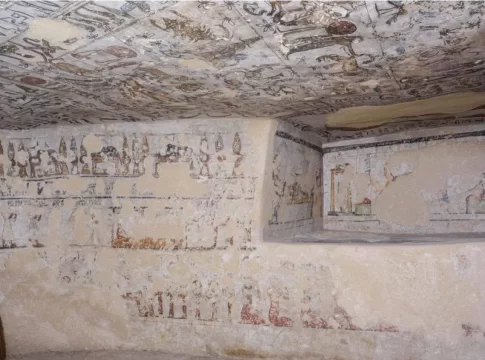
The restoration project, undertaken by Egypt’s Supreme Council of Antiquities (SCA), is part of a broader national strategy aimed at reviving Egypt’s cultural heritage and expanding tourism in Upper Egypt. The tomb, dating back to the second century AD, belonged to two brothers, Ip Pamani and Pa Mehyt, and is noted for its vibrant funerary imagery and the unique painted ceiling featuring zodiac towers.
The restoration of the Tomb of the Towers involved meticulous mechanical and chemical cleaning of the tomb’s walls and ceilings, consolidating flaking pigments and plaster, and reconstructing missing sections with compatible materials. The head of the Central Department for Conservation and Restoration, Manal El-Gannamm, emphasized the importance of adhering to internationally recognized standards throughout the process.
Mohamed Ismail Khaled, Secretary-General of the SCA, lauded the team’s professionalism, highlighting the council’s enduring commitment to heritage conservation. “Preserving heritage is a national responsibility that requires coordinated and sustained efforts,” he stated.
Minister of Tourism and Antiquities Sherif Fathy noted that projects like the Tomb of the Towers not only preserve national heritage but also enhance the tourism experience, support local communities, and foster sustainable economic growth. The site was first documented over 150 years ago and excavated by British archaeologist Sir Flinders Petrie in the early 1900s.
Athribis, part of the ninth Upper Egyptian nome, holds significant archaeological value. The area played a crucial role in the late Ptolemaic period and the early development of monasticism. It features a range of historical structures, including temples, cemeteries, quarries, and a sixth-century church.
Dr. Ahmed El-Masry, an Egyptologist at Cairo University, remarked, “The reopening of the Tomb of the Towers serves as a beacon of Egypt’s rich history and its commitment to preserving cultural identity. It demonstrates how historical sites can be transformed into educational resources, offering valuable insights into ancient civilizations.”