
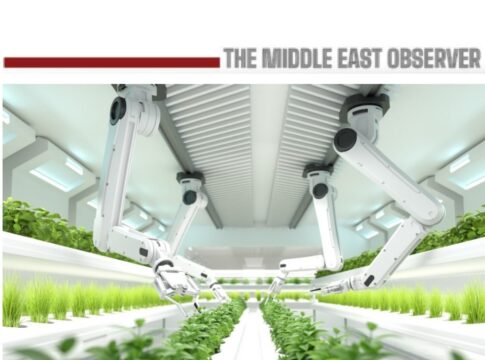
Chinese researchers have introduced what is described as the world’s first intelligent robot capable of independently completing the full plant hybridisation process, marking a significant step in the application of artificial intelligence to agriculture.
Developed by the Institute of Genetics and Developmental Biology at the Chinese Academy of Sciences, the AI-powered system—named “GEAIR”—uses advanced visual recognition and robotic control to identify flowers, perform precise cross-pollination, and navigate efficiently between plants without human intervention.
Scientists say the technology could streamline one of agriculture’s most labour-intensive processes, enabling faster development of high-quality crop varieties while lowering production costs. The system is also designed to support next-generation techniques such as rapid hybridisation, allowing tailored crop development at scale.
Researchers highlighted its potential in crops such as soybeans, where automated hybridisation could overcome long standing technical barriers and significantly boost yields. The project underscores China’s broader push to integrate AI into scientific research and sustainable agricultural production.