
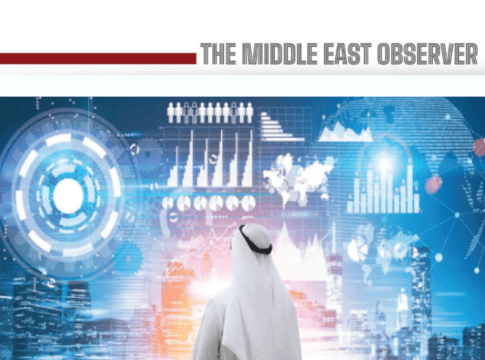
Saudi Arabia is accelerating its technology transformation as cloud computing, advanced logistics and digital infrastructure development converge under the Kingdom’s broader economic diversification agenda.
One key pillar is the near-completion of major cloud infrastructure by Microsoft, which has been expanding local cloud and artificial intelligence capacity in Saudi Arabia. The infrastructure is designed to support government digitisation, enterprise AI adoption and data-sovereignty requirements, anchoring advanced computing workloads inside the Kingdom rather than relying on overseas platforms.
At the same time, Saudi Arabia is moving closer to permitting the use of drones for cargo transport. Transport and Logistics Services Minister Saleh bin Nasser Al-Jasser has said the Kingdom is “not far” from approving drone-based goods delivery, following pilot programmes and regulatory preparations. Cargo drones are expected to support last-mile delivery, remote-area logistics and time-sensitive supply chains as Saudi Arabia expands its role as a regional logistics hub.
A third strategic dimension is emerging in NEOM, which is increasingly being positioned as a potential data-centre and digital-infrastructure hub. Leveraging renewable energy, advanced cooling technologies and proximity to key subsea cable routes, NEOM could host energy-intensive workloads such as cloud services, artificial intelligence and high-performance computing—representing a pragmatic first phase in translating its futuristic vision into economically viable infrastructure.
Beyond physical infrastructure, Saudi Arabia has also moved to institutionalise data and AI governance. Through the Saudi Data and AI Authority (SDAIA), the Kingdom has established a national framework for data management, AI deployment and ethical use, providing regulatory clarity that supports large-scale adoption across government and industry.
Digital monetisation and payments infrastructure form another pillar. The Saudi Central Bank (SAMA) has expanded electronic payments and e-commerce rails, reinforcing fintech adoption and enabling digital services to scale at population level—an essential complement to cloud and AI investments.
Connectivity underpins these initiatives. Ongoing 5G evolution, including standalone deployments and industrial use cases, is strengthening the network foundation required for smart logistics, automation, and data-intensive services. In parallel, Saudi Arabia is investing in frontier research, including quantum technology programmes led by institutions such as KAUST, signalling a longer-term commitment to deep-tech capability building.
Taken together, these pillars signal a shift from ambition to execution. Cloud capacity provides the computing backbone; drone logistics modernise physical supply chains; NEOM offers the geographic and energy platform for next-generation data infrastructure; while governance, payments and connectivity ensure scalability. Saudi Arabia’s strategy is not simply to adopt advanced technologies, but to embed them domestically—positioning the Kingdom as a regional node for data, logistics and digital services.