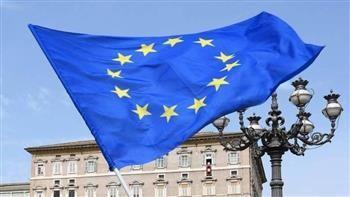
The European Commission has unveiled a sweeping new initiative titled the “Pact for the Mediterranean,” a comprehensive framework designed to renew and deepen relations between the European Union and its ten Southern Neighbourhood partners — Algeria, Egypt, Israel, Jordan, Lebanon, Libya, Morocco, Palestine, Tunisia, and Syria — with potential participation from Gulf countries, Turkey, Mauritania, Senegal, the Western Balkans, and Black Sea partners.
European officials describe the Pact as a “paradigm shift” in Euro-Mediterranean cooperation, moving from traditional aid and political dialogue to a joint development model based on co-ownership, co-creation, and shared responsibility. The document highlights the creation of a Common Mediterranean Space, aimed at transforming the region into a hub for trade, green energy, and innovation — while addressing long-standing challenges of migration, resource scarcity, and economic disparity.
Key Pillars of the New Pact
1. Economic and Trade Integration
The EU plans to reduce trade barriers and align Mediterranean partners more closely with EU single-market standards. This includes facilitating investment mobility, simplifying customs procedures, and supporting regional supply-chain integration for agriculture, fertilisers, and critical raw materials. A Commission source told Euronews that Brussels may also explore partial tariff exemptions for key sectors, paving the way for a new Euro-Mediterranean free-trade corridor.
2. Energy and Climate Cooperation
The Pact devotes significant focus to energy transition and climate action. It promotes large-scale projects in decarbonisation, renewable energy, hydrogen production, and carbon-capture technologies, in addition to expanding joint research on climate change mitigation, desertification, and water scarcity management.
A flagship initiative under consideration is a Mediterranean Green Energy Network linking southern solar and wind power hubs with northern European grids through trans-Mediterranean interconnections. This would align with the EU’s “Global Gateway” strategy, which seeks sustainable infrastructure partnerships as alternatives to China’s Belt and Road Initiative.
3. Migration and Border Governance
Migration remains central to the Pact. It proposes coordinated frameworks on border management, search-and-rescue, refugee support, and labour-mobility agreements. The EU pledges technical and financial assistance to help partner states improve asylum systems and border control capacity, while offering new legal migration pathways to Europe for skilled workers from the region — especially in healthcare, construction, and green-tech industries.
4. Digitalisation, AI, and Innovation
Brussels plans to fund a Mediterranean Digital Corridor, connecting regional technology parks and startups with European innovation clusters. The initiative prioritises artificial intelligence (AI), cybersecurity, and digital-skills training to bridge the digital divide and enhance employment for young populations.
5. Education, Culture, and Research Cooperation
Among the most symbolic elements is the proposal to establish a “Mediterranean University” — a cross-border academic hub to promote student mobility, language learning, and research collaboration in climate science, sustainable agriculture, and maritime studies. Complementary programs will expand scholarships under Erasmus+ and strengthen cultural exchange to foster regional understanding.
6. Private-Sector and Investment Support
The EU intends to mobilise European Investment Bank (EIB) funds and private capital for infrastructure, manufacturing, and digital transformation projects. A “Mediterranean Investment Platform” will be created to de-risk investments, support SMEs, and attract green finance across the region.
7. Disaster Preparedness and Resilience
The Pact also outlines joint mechanisms for disaster risk reduction, early-warning systems, and climate-adaptation planning, reflecting the Mediterranean’s growing vulnerability to wildfires, droughts, and coastal erosion.
Commissioner for the Mediterranean Dubravka Šuica described the Pact as a departure from past EU frameworks such as the 1995 Barcelona Process, which had promised deeper integration but delivered limited results. “This time, we are adopting a bottom-up approach. We have listened to stakeholders on the ground — not just governments but communities and entrepreneurs. It’s a partnership among equals,” she said during the Brussels launch.
High Representative for Foreign Affairs Kaja Kallas said the EU aims to be a “credible and reliable” partner at a time when other powers — notably China, Russia, and Turkey — are expanding their influence in the region. “We are contributing positively by promoting an equal partnership,” Kallas said, adding that Brussels continues to “raise the issue of Russia” with Mediterranean partners and discourage any attempts to circumvent EU sanctions.
Analysts see the pact as both defensive and visionary. Dr Fatima Bouzouina, a North Africa–EU relations expert, told Euractiv that “the Pact reflects Europe’s realisation that stability in its southern neighbourhood is no longer a peripheral issue — it’s central to its economic resilience and energy security.” She added that the inclusion of climate, AI, and green-hydrogen cooperation “positions the Mediterranean as a shared laboratory for Europe’s future.”
According to Commission insiders, the first implementation roadmap will be unveiled early 2026, with funding drawn from the EU’s Neighbourhood, Development and International Cooperation Instrument (NDICI-Global Europe) and the European Investment Bank’s climate facilities.
In practical terms, officials say pilot projects — including a green-hydrogen corridor between Morocco and Spain, a digital-skills exchange network across Egypt, Tunisia, and Jordan, and a joint migration-management platform with Libya and Egypt — are expected to begin within 12 months.
The New Pact for the Mediterranean signals Brussels’ determination to reinvent its engagement with the region through shared prosperity and sustainability rather than aid-dependency. Yet its success will hinge on execution — balancing investment with inclusion, and ensuring that the lofty rhetoric of “co-creation” translates into real development felt across Mediterranean societies.
If implemented effectively, the Pact could revive the long-stalled dream of a truly integrated Euro-Mediterranean community — one grounded in mutual benefit, green transition, and stability across one of the world’s most strategically vital regions.