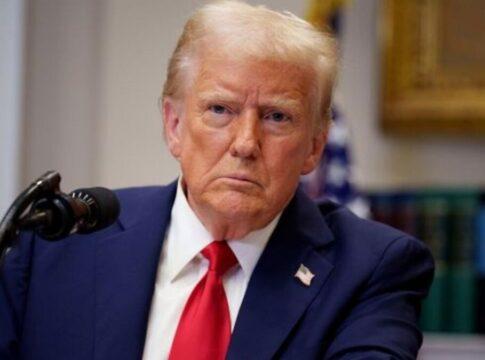
“We cannot anticipate a successful AI framework if every article or book necessitates a financial transaction,” Trump stated. “While we value intellectual property, enforcing such fees would cripple innovation and competitiveness, particularly against nations like China, which do not impose stringent IP regulations.”
Trump’s remarks coincided with the White House’s introduction of an AI Action Plan aimed at bolstering the nation’s AI capabilities while dismantling regulatory barriers. This approach contrasts with that of his predecessor, Joe Biden, who prioritized ensuring the safety of AI technology through governmental oversight.
The Trump administration’s plan also suggests updating federal procurement guidelines to ensure government contracts only engage with AI developers whose systems are free from ideological biases. The plan also proposes revising the National Institute of Standards and Technology AI Risk Management Framework, removing references to misinformation and social agendas.
However, the plan notably omits any mention of copyright protection—a point of contention that has sparked lawsuits from content creators and media giants like Disney and NBCUniversal. These entities argue that their materials are being exploited in AI training without fair compensation.
This debate has reached the legislative sphere, with Senators Josh Hawley (R-MO) and Richard Blumenthal (D-CT) introducing a bill requiring AI companies to obtain consent before using personal content in their systems. Yet, Trump’s comments suggest resistance to this legislative approach, aligning with tech industry arguments that leveraging content for AI development constitutes “fair use.”
“When content is absorbed into the vast intelligence machine, it’s impractical to initiate financial transactions for each use,” Trump argued. “While plagiarism must be avoided, utilizing learned knowledge from content should be permissible without entangling in complex contract negotiations.”
As the AI landscape evolves, the balance between fostering innovation and protecting intellectual property remains a pivotal challenge, with Trump advocating for a common-sense approach that prioritizes technological advancement over restrictive copyright practices.