
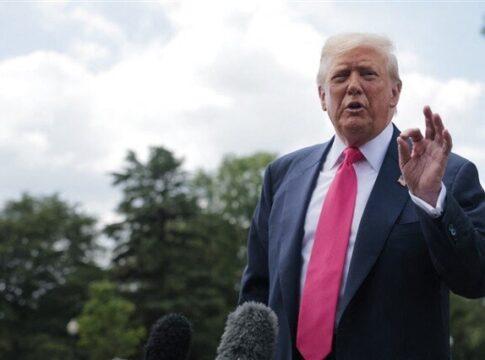
“Today’s commitments are ensuring that the future is designed, built, and made right here in Pennsylvania and across the United States,” President Trump declared, emphasizing a strategic focus on keeping AI advancements domestic. The announcement reflects a growing urgency to outpace China in the AI sector, with Trump asserting, “We are way ahead of China, and the plants are starting up.”
With generative AI requiring massive computing power, primarily driven by Nvidia’s energy-intensive processors, there is mounting concern that the current U.S. infrastructure may fall short. Experts predict that by 2028 tech companies will require up to five gigawatts of electricity—equivalent to powering five million homes.
The summit, attended by high-profile executives from companies like Palantir, Anthropic, Exxon, and Chevron, underscored the private sector’s alignment with governmental initiatives. Notably, Google pledged $25 billion to establish AI-ready data centers in Pennsylvania and the surrounding regions. Ruth Porat, Google’s president and chief investment officer, reinforced the company’s commitment, stating, “We support President Trump’s clear and urgent direction that our nation invest in AI, so that America can continue to lead.”
Google also announced a collaboration with Brookfield Asset Management to modernize two hydropower facilities in Pennsylvania, contributing 670 megawatts to the regional grid. Meanwhile, investment giant Blackstone committed over $25 billion towards new data centers and energy infrastructure.
U.S. Senator David McCormick of Pennsylvania lauded these developments as critical not only for the state but for national interests, reflecting a shared sentiment in Washington regarding the need to maintain a competitive edge over China.
Central to these efforts is the “Stargate” project launched by Trump in January, projecting up to $500 billion in U.S. AI infrastructure investments. This initiative is part of a broader strategy, including the reversal of several policies from the previous administration that restricted AI development and technology exports.
As the U.S. gears up for this technological surge, Japanese tech investor SoftBank, ChatGPT-maker OpenAI, and Oracle have pledged $100 billion for the project’s initial phase. In a strategic shift, President Trump is expected to reveal his detailed blueprint for AI advancement later this month, underscoring his administration’s commitment to maintaining U.S. leadership in the rapidly evolving AI landscape.