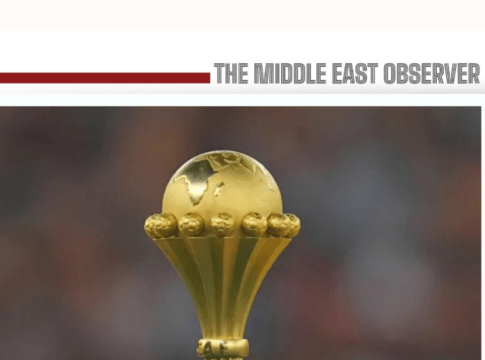
AFCON 2025 has reached a defining semi-final stage that encapsulates the modern balance of African football, as four continental heavyweights—Egypt, Senegal, Morocco and Nigeria—remain in contention, each carrying a distinct footballing identity shaped by star power, tactical maturity and tournament experience, while collectively representing four of Africa’s highest-ranked national teams and reinforcing the sense that this edition has delivered one of the strongest semi-final line-ups in recent AFCON history.
Egypt’s clash with Senegal revives one of the competition’s most compelling modern rivalries, echoing the 2022 final and once again placing the spotlight on Mohamed Salah and Sadio Mane, two players whose club-level success has long contrasted with their differing AFCON fortunes, as Egypt chase a record-extending eighth continental crown while Senegal seek to confirm their recent rise from perennial contenders to a sustained African powerhouse, built on squad depth, physical intensity and tournament composure.
On the other side of the bracket, host nation Morocco continue to project calm authority, entering the semi-finals unbeaten and defensively disciplined under Walid Regragui, with captain Achraf Hakimi anchoring a side that has conceded just once so far and appears increasingly comfortable with the weight of home expectations, while Nigeria arrive with the competition’s most explosive attacking profile, driven by Victor Osimhen and a forward line that has produced goals in volume, underscoring their capacity to overwhelm opponents if matches open up.
Individual output has played a decisive role throughout the tournament, with Morocco’s Brahim Diaz leading the scoring charts on five goals, followed by Salah on four and Osimhen among the joint top contributors on four, a trio that reflects the diversity of paths to success at AFCON, where disciplined systems, transitional speed and moments of elite finishing all carry equal weight in knockout football.
Historically, the Africa Cup of Nations has rewarded both tradition and timing, with Egypt standing alone as the competition’s most successful nation, Cameroon and Ghana forming the next tier of multiple winners, Senegal breaking their title drought only recently, and Morocco’s sole triumph dating back to 1976, a record that underlines how AFCON often resists simple forecasts and allows new narratives to emerge alongside established legacies.
As the tournament moves toward its climax, the indicators suggest fine margins rather than a dominant favourite, with Egypt’s pedigree, Senegal’s balance, Morocco’s control and Nigeria’s firepower each offering a credible route to the trophy, leaving AFCON 2025 finely poised and genuinely open to all four contenders as Africa’s flagship football competition once again delivers uncertainty, quality and continental drama in equal measure.