The Africa Cup of Nations (AFCON), Africa’s most prestigious international football competition, has evolved over nearly seven decades from a modest regional tournament into a global sporting showcase that reflects the continent’s sporting excellence, political history, and cultural identity.
Organised by the Confédération Africaine de Football (CAF), AFCON brings together national teams from across Africa and is widely regarded as the pinnacle of continental football. The tournament is held biennially and has grown steadily in scale, stature, and global attention.
AFCON was first staged in 1957 in Khartoum, Sudan, with just three participating nations. Egypt defeated host Sudan in the final to win the inaugural title and the Abdel Aziz Abdallah Salem Trophy, named after CAF’s first president. The competition expanded rapidly as newly independent African states embraced football as a symbol of national pride and unity.
By the 1960s, AFCON had become a powerful platform for showcasing African talent, with the introduction of qualifying rounds in 1968 reflecting growing participation. CAF also decided that year to hold the tournament every two years, cementing its place in the international football calendar.
The tournament entered a new era in the 1970s and 1980s under the leadership of CAF president Ydnekachew Tessema, gaining international credibility and commercial appeal. Professional players were officially allowed to participate from 1980, and corporate sponsorships followed in 1984.
AFCON became a launchpad for legendary players, including Samuel Eto’o, the tournament’s all-time top scorer, and Roger Milla, whose performances helped elevate African football onto the world stage.
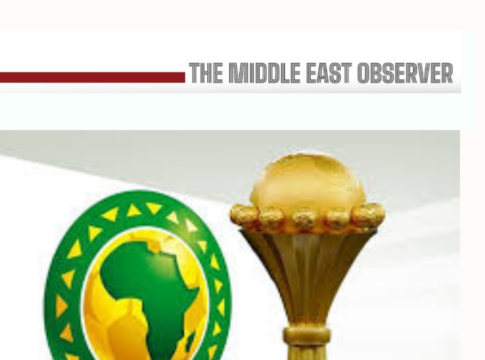
The competition’s trophies also reflect its evolving legacy: the African Unity Cup was permanently awarded to Cameroon in 2000, and the current Cup of Nations trophy was introduced in 2002.
Beyond sport, AFCON has often mirrored Africa’s political and social currents. Ghana’s victories in the 1960s were closely associated with President Kwame Nkrumah’s pan-African vision, while South Africa’s 1996 triumph symbolised post-apartheid reconciliation.
The tournament has also faced moments of tragedy and tension, most notably in 2010, when an attack on the Togo team bus in Angola led to the team’s withdrawal, highlighting the intersection of security and sport.
AFCON has continued to expand in the modern era. In 2019, the number of participating teams increased from 16 to 24, broadening representation across the continent. While CAF briefly shifted the tournament to June–July to reduce disruption to European club football, subsequent editions returned to the traditional January–February window due to climate and scheduling considerations.
Recent champions have included Senegal (2021) and Côte d’Ivoire (2023), underscoring the competitive depth of African football.
The 35th Africa Cup of Nations is currently being staged in Morocco, with 24 national teams competing across multiple cities. Morocco opened the tournament with a 2–0 victory over Comoros, setting the tone for an edition expected to draw strong crowds, high-level football, and significant international attention.
As AFCON continues to grow, it remains more than a football tournament. It is a reflection of Africa’s diversity, resilience, and shared aspirations—an event that unites the continent every two years and projects African football’s rising influence on the global stage.