
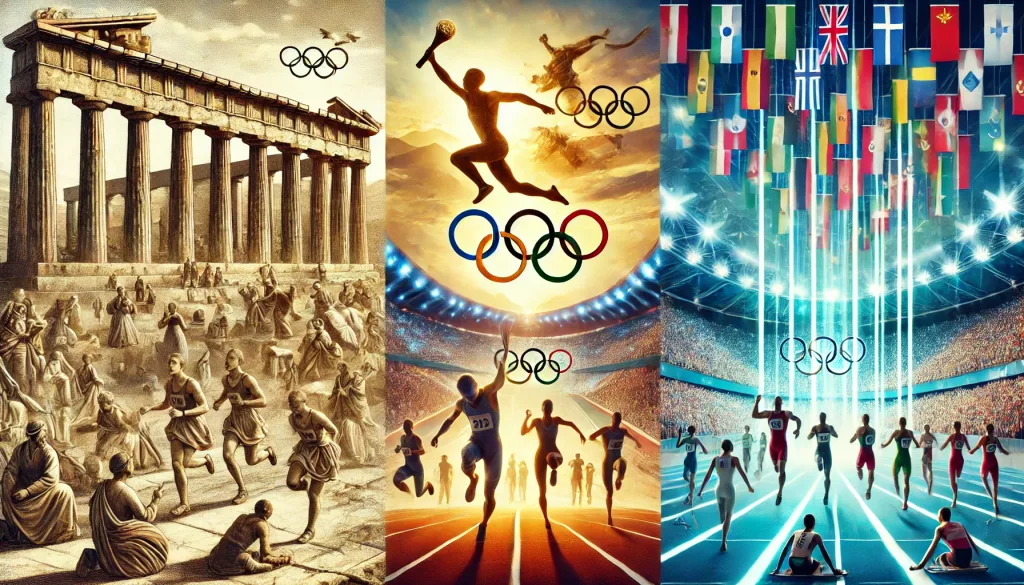
In a sweeping new literature review published recently, researchers trace sport’s extraordinary evolution—from primitive survival exercises to today’s multi-billion‑dollar spectacles that unite nations. Covering some 3,000 years of history, the study reveals how organized athletic competition emerged from ancient war training, village rituals, and communal celebration to become an international cultural phenomenon.
Sport’s roots lie in activities essential to survival: throwing stones, running to hunt, wrestling, or training for war. As civilizations like ancient Egypt and Mesopotamia developed, these physical routines acquired social weight—as entertainment, religious ritual, and communal cohesion.
It was the Greeks, however, who pioneered organized competition. The first Olympic Games in 776 BC featured foot races, discus, javelin, wrestling and chariot racing—event formats that still resonate in modern sport today. These Games not only measured strength and skill but also forged a pan‑Greek identity through athletic unity and spiritual celebration.
With the collapse of Rome, formalized sport receded in medieval Europe but persisted in festivals and martial contests. Jousting, archery, swordsmanship—tied to chivalry and local tradition—kept sporting culture alive. As Renaissance humanism revived classical ideas, sport gradually re-entered public life as both education and spectacle.
Historian Allen Guttmann identifies key stages in this progression, noting that modern sport evolved through processes of specialization, rationalization, quantification, and record‑keeping—criteria that ancient and medieval games only partially fulfilled.
The 18th and 19th centuries reshaped sport. As leisure time expanded in urban societies, formal clubs and governing bodies emerged; standardized rulebooks spread; national contests proliferated. The codification of football in England, the invention of basketball and baseball in North America, and early bicycle races all typified this era.
A crucial milestone came in 1896, when Pierre de Coubertin, inspired by England’s “Much Wenlock” Games, founded the International Olympic Committee, launching the first modern Olympic Games in Athens. Coubertin espoused the educational values of sport—fair play, discipline, and moral development—that echoed ancient Greek ideals.
The last century has seen sport grow into a global phenomenon, underpinned by mass media, professional leagues, mega-events, and digital platforms. Tournaments like the FIFA World Cup, Wimbledon, Super Bowl, and successive Olympic Games have become cultural cornerstones.
Technology transformed the fan experience—instant replay, VAR, wearables, and data analytics now drive both performance and audience engagement. Esports and extreme sports illustrate how new breeds of athletic contests continue to emerge, attracting global fan bases and investment.
Beyond physical competition, sport has long carried aspirational values. The ancient Olympic truce (ekecheiria), which temporarily halted Greek city‑state conflicts, survives today as a symbolic appeal for peace during the Olympic Games.
UN Secretary‑General António Guterres recently reaffirmed the Olympic Truce ahead of Paris 2024, urging nations to pause hostilities—from Gaza to Ukraine—in honor of the Games and to uphold sport’s unifying power. While academics debate its effectiveness as a conflict‑resolution tool, the Truce remains an enduring symbol of sport’s potential for diplomacy. “Sport is much more than play—it’s a mirror to society’s evolution,” says Professor Tony Collins, sports historian at De Montfort University. “From medieval jousts to modern stadiums, sport reflects social values and political change”.
Dr. Alice Guttmann, coordinator of this new review, emphasizes: “Every era of sport—from ritual to record—reveals humanity’s deeper pursuits: excellence, unity, and identity.” Her findings underscore patterns highlighted by Guttmann’s seven criteria that distinguish modern athletics from traditional games.
From spearmen to sprinters, from village festivals to global broadcasts, the story of sport is the story of humanity. At its core lies a timeless cocktail of endurance, creativity, and collective spirit. As arenas evolve into virtual platforms and athletes into ambassadors, sport remains a dynamic thread—revealing how we strive, compete, connect, and hope.