
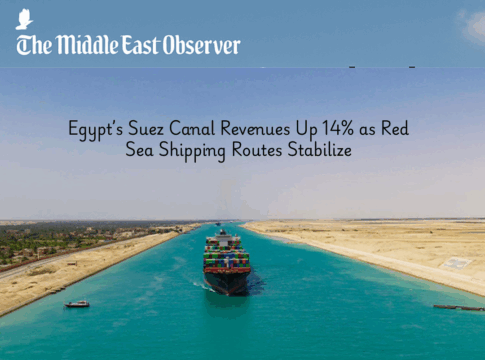
Egypt’s Suez Canal has reported a strong rebound in traffic and revenues, with income rising 14.2 percent year-on-year between July and October 2025, as regional stability in the Red Sea and Gaza ceasefire encouraged more shipping lines to return to the vital waterway.
According to Suez Canal Authority Chairman Osama Rabie, October saw the transit of 229 vessels—the highest monthly figure since the onset of the regional crisis earlier this year. Rabie described the recent months as showing a “relative improvement” in both shipping activity and cargo volumes, a trend that reflects renewed confidence among global maritime operators.
From July to October, a total of 4,405 vessels carrying 185 million metric tons of cargo passed through the canal, compared with 4,332 ships and 167.6 million tons during the same period in 2024, Rabie told Reuters following a meeting with representatives of 20 international shipping companies in Ismailia.
The recovery follows months of disruption caused by heightened tensions in the Red Sea and the Bab al-Mandab Strait, which had forced many carriers to reroute vessels around the Cape of Good Hope. Rabie credited the positive diplomatic climate following last month’s Sharm el-Sheikh summit on Gaza’s reconstruction and future stability for helping restore confidence in regional shipping lanes.
The authority has invited global operators to conduct trial voyages through the canal as part of efforts to reaffirm its reliability as the fastest maritime route between Europe and Asia. French shipping giant CMA CGM has already resumed operations with two major container vessels, while other leading carriers—including MSC, Evergreen, and Cosco—are evaluating plans to expand their Suez transits in the coming weeks.
The Suez Canal remains a cornerstone of Egypt’s foreign currency earnings, generating billions of dollars annually for the country’s treasury. The recent upturn in traffic offers relief to Egypt’s strained economy, which has been navigating high inflation, debt obligations, and lower transit revenues earlier this year due to shipping disruptions.
Rabie emphasized that the canal’s recent recovery demonstrates its enduring strategic importance for global trade, noting that over 12% of worldwide maritime commerce still passes through the 193-kilometer waterway.
As conditions in the Red Sea continue to stabilize, Egypt’s focus now turns to sustaining the rebound—through enhanced navigation safety, digital monitoring systems, and expanded cooperation with major global shipping lines—aimed at reaffirming the Suez Canal’s position as one of the world’s most reliable and efficient trade corridors.