
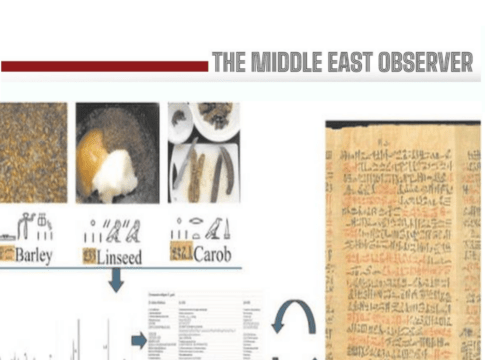
German researchers have recreated and scientifically tested ancient Egyptian medical recipes, finding that several Pharaonic treatments were genuinely effective and based on empirical knowledge rather than ritual belief.
The study was conducted by researchers from Philipps University of Marburg and published in the peer-reviewed Journal of Ethnopharmacology. The team examined original ancient Egyptian medical texts and reconstructed the remedies using the same ingredients and preparation methods, including soaking, boiling, and mixing, before analysing them with modern laboratory techniques.
One of the most significant findings involved a barley-based remedy prescribed for cough and breathing difficulties. Scientific analysis identified hordenine, a naturally occurring compound in barley known for its effects on the respiratory and nervous systems, matching the treatment’s original use. Researchers found that accompanying plant ingredients enhanced absorption and effectiveness while reducing potential side effects, mirroring the logic of modern combination medicines.
The study also examined remedies containing flaxseed and carob, traditionally used to treat coughs and fever. Chemical analysis confirmed the presence of compounds with soothing, anti-inflammatory, and fever-reducing properties. Using advanced techniques such as nuclear magnetic resonance spectroscopy and mass spectrometry, the researchers demonstrated that ancient preparation methods were essential to activating these medicinal effects.
The findings suggest that ancient Egyptian medicine relied on systematic observation and formulation, placing it closer to scientific practice than previously assumed.