
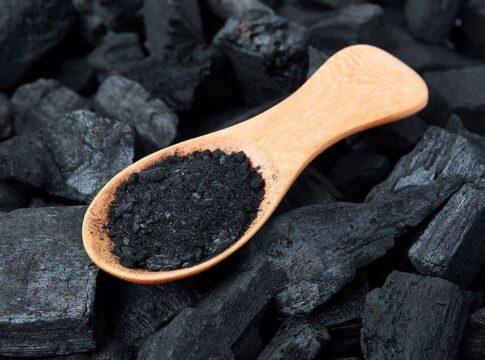
An international team of researchers from Russia, China, and Mongolia has developed a cleaner coal processing technology capable of converting up to 97.5% of coal into high-value carbon materials—with minimal environmental impact.
The technology, spearheaded by the Krasnoyarsk Science Centre of the Russian Academy of Sciences, uses a novel solvent-based process that breaks coal down into polyaromatic hydrocarbons (PAHs) and resins, which are key components in carbon fiber, aerospace-grade composites, and advanced materials used in electronics and automotive sectors.
Unlike traditional coal combustion, which releases significant carbon emissions and hazardous substances, the new process transforms coal into chemically stable, heat-resistant compounds—without burning it. According to details shared by TV BRICS, the method drastically reduces the generation of benzo[a]pyrene, a potent carcinogen typically found in coal tar derivatives. “We’re not just reducing emissions—we’re redefining the purpose of coal,” said Dr. Elena Novikova, a materials chemist unaffiliated with the project. “This is a potential game-changer for countries that rely heavily on coal but want to transition toward greener technologies.”
The process involves dissolving coal in a specialized solvent and heating it to approximately 380°C. Under these conditions, coal molecules break apart into complex aromatic structures. These PAHs are the building blocks of advanced carbon-based materials, which are increasingly in demand across renewable energy, defense, and electronics industries.
Crucially, the type of solvent used determines the final product’s properties. The researchers discovered that coal tar—a byproduct of traditional coal pyrolysis—produces the richest aromatic structure, enhancing the end material’s thermal resistance and chemical durability. “The solvent choice directly influences molecular architecture,” explained Dr. Zhang Wei, a Chinese member of the research team. “The more aromatic the structure, the more suitable the material becomes for use in carbon composites and advanced polymers.”
What sets this method apart from existing processes is its low environmental footprint. Even when using different solvents, the system limits waste to no more than 8%, making it one of the most efficient coal conversion techniques reported to date. Furthermore, extended processing times help reduce harmful compounds to negligible levels.
By avoiding combustion altogether, the process significantly cuts down on airborne pollutants and solid waste, presenting a cleaner alternative for coal-rich nations seeking to reduce their carbon output without abandoning their resource base.
As the world moves toward decarbonization, coal has come under increasing scrutiny. However, this innovation offers a third path—using coal not for energy, but for materials. “This approach could open up a new industry segment: one where coal is no longer a pollutant, but a precursor to sustainable industrial materials,” noted Dr. Munkhbat Tserendorj, a Mongolian environmental scientist involved in the project.
Already, there is interest from industrial partners in China’s Inner Mongolia region and Russia’s Krasnoyarsk Krai, both home to vast coal reserves and strong mining infrastructure. According to sources close to the project, pilot production facilities are under discussion and could launch within the next 18 months.
The scientists believe their work could help coal-dependent countries pivot toward clean material manufacturing, especially in sectors demanding high-performance carbon materials—like aviation, defense, and electric vehicles.
The research team is now focused on scaling the process and working with industry partners to commercialize the technology. In parallel, additional studies are underway to optimize the solvent mix and reduce residual toxicity even further.