
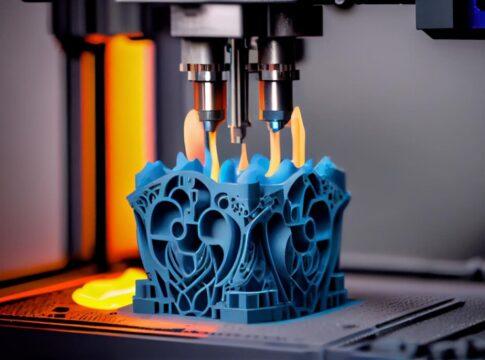
As construction costs rise and project timelines tighten across the MENA region, the promise of 3D printing is no longer a futuristic dream—it’s fast becoming a smart, scalable alternative to traditional construction. Offering speed, design flexibility, lower emissions, and leaner labor requirements, 3D printing is poised to redefine how buildings are conceived and executed across the region.
At its core, 3D construction printing uses computer-guided machines to layer concrete or composite material in pre-programmed shapes. This allows complex, curved structures to be created with minimal human input and near-zero waste—something conventional formwork-heavy methods struggle to deliver efficiently.
Recent flagship projects, such as Qatar’s upcoming 3D-printed public schools, have proven the feasibility of large-scale application. But beyond prestige, the real value lies in the numbers:
- Up to 60% less material waste,
- Up to 50% faster build times,
- Reduced reliance on skilled labor,
- Lower carbon footprint, and
- On-site precision with fewer logistical dependencies.
With governments across the Gulf pushing for smarter, greener construction under Vision 2030-style agendas, 3D printing aligns perfectly with regional goals—particularly in low-income housing, schools, disaster relief, and public infrastructure.
MENA-based construction companies now face a key decision: wait and watch—or invest in building in-house 3D construction capacity. Firms that partner early with global tech leaders like COBOD, ICON, or Apis Cor can leapfrog older players still reliant on manpower-intensive techniques.
Pilot projects, regional training hubs, and government-funded innovation parks offer entry points for builders to test materials, hire and train specialists, and adapt designs to the local climate. For example, Saudi Arabia’s NEOM and the UAE’s smart city mandates are natural fits for 3D innovation.
The return on investment in 3D construction is expected to outpace conventional builds within 3–5 years, especially in repetitive design scenarios like housing clusters or schools. Reduced labor costs, accelerated timelines, and local sourcing of materials compound to deliver efficiency gains—especially critical in high-temperature, labor-scarce regions.
For forward-looking construction firms in the Middle East and North Africa, adopting 3D printing isn’t just about technology—it’s about resilience, relevance, and regional leadership in the decades to come.