
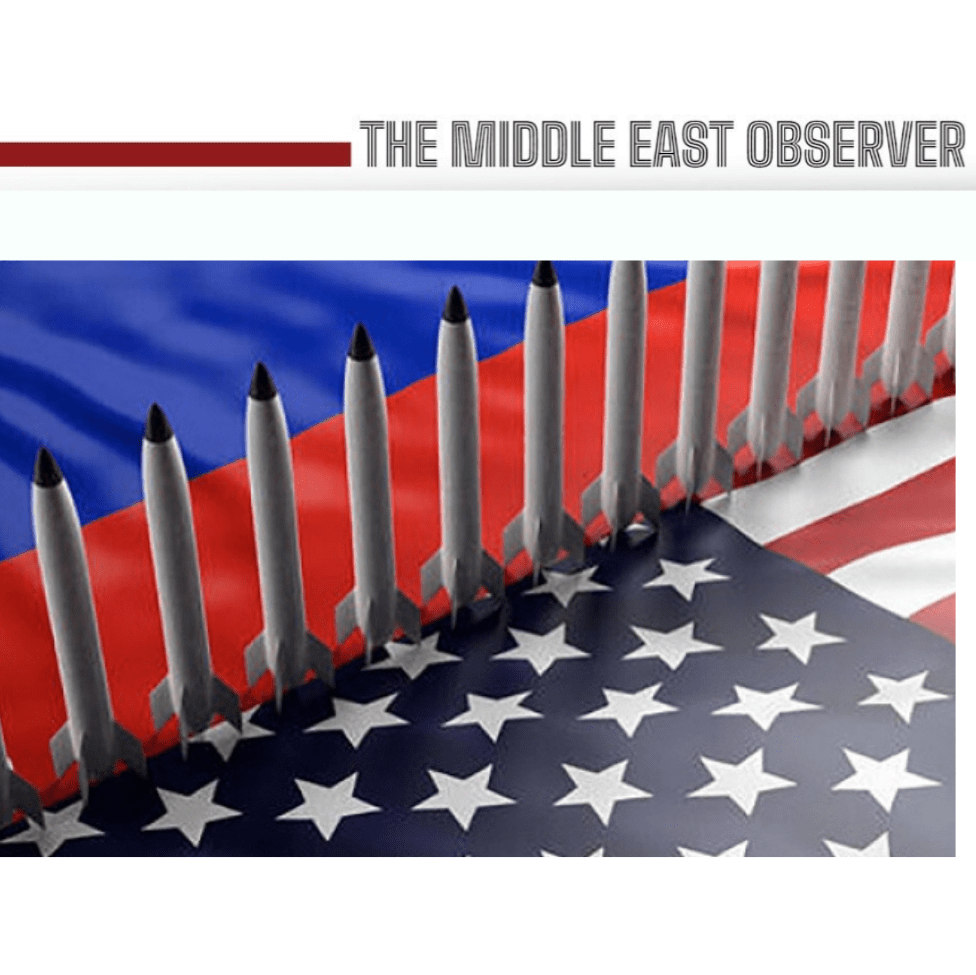
For more than three decades, arms control agreements between Washington and Moscow acted as guardrails against unchecked nuclear competition. That architecture began with the first Strategic Arms Reduction Treaty (START I) in 1991, signed as the Cold War ended and the Soviet Union neared collapse.
START I reflected a shared recognition that vast Cold War–era nuclear arsenals were no longer politically sustainable or strategically necessary. Beyond cutting thousands of warheads, the treaty introduced unprecedented verification measures—on-site inspections, data exchanges, and monitoring regimes—designed to reduce mistrust and prevent miscalculation at a moment of profound geopolitical uncertainty. Its governing premise was straightforward: mutual vulnerability required mutual restraint. That premise endured, though in narrower form, into the post–Cold War era, culminating in the New Strategic Arms Reduction Treaty (New START) signed in 2010. New START capped deployed strategic warheads at 1,550 and preserved inspection mechanisms that allowed both sides to verify compliance, even as the broader arms control architecture steadily weakened.
Today, that structure has largely unravelled. With New START expired, there are no legally binding limits, no inspections, and no formal transparency mechanisms governing the world’s two largest nuclear arsenals. Former US President Barack Obama warned that allowing the treaty to lapse would erase decades of diplomacy and risk a renewed arms race, yet no successor agreement has emerged—reflecting a deeper erosion of the political foundations that once sustained arms control.
The United States now argues that bilateral arrangements no longer reflect strategic reality and insists that China must be included in any future framework. Beijing, whose arsenal remains far smaller but is expanding rapidly, rejects participation, arguing that parity-based limits would entrench strategic inferiority. Russia counters that any new agreement must also address the nuclear forces of NATO allies, particularly the United Kingdom and France—an idea firmly rejected in Europe. The result is not negotiation, but strategic paralysis.
As diplomacy stalls, strategic behaviour has shifted accordingly. The nuclear landscape has grown more crowded and less predictable. China is expanding its forces, European nuclear powers are reinforcing deterrence, and Washington and Moscow—still holding around 90% of the world’s nuclear weapons—are modernising all three legs of their nuclear triads amid technological change that compresses decision-making timelines and raises escalation risks.
The trajectory ahead is therefore not defined by arms control revival or numerical restraint, but by deterrence enforced through capability and resolve. In the absence of binding agreements, stability rests on the certainty of retaliation, the survivability of nuclear forces, and the resilience of command-and-control systems under extreme pressure. States are modernising not to “win” nuclear conflict, but to ensure that no adversary can credibly believe a first strike would succeed or escalation could be controlled on favourable terms.
This environment is inherently less forgiving. Shorter warning times, the spread of dual-use delivery systems, exposure of command-and-control networks to cyber and space disruption, and forward-deployed forces all reduce decision margins in a crisis. As a result, stability now depends heavily on functioning crisis-management mechanisms—military hotlines, escalation-control procedures, disciplined doctrines, and resilient communications—rather than on formal treaties. Deterrence holds not because of trust or law, but because the costs of failure are universally recognised as catastrophic—making restraint less a matter of choice than a condition for global survival.