
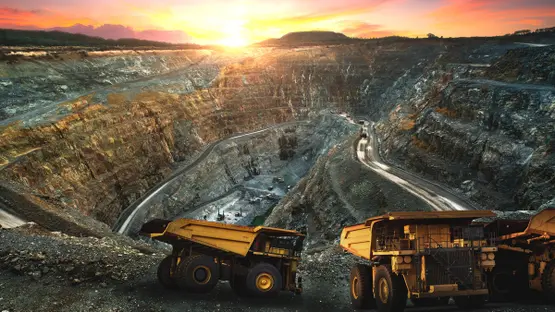
Saudi Arabia has more than doubled its spending on mining exploration as it moves to transform the sector into a central engine of economic diversification under Vision 2030. Minister of Industry and Mineral Resources Bandar Alkhorayef said the country’s exploration expenditure now exceeds SR 487 (about US $130) per km², well above the previous national target of SR 200. “The most important indicator for us is actual spending on exploration, and that continues to grow steadily,” he said during the GEOMIN 2025 Forum in Jeddah.
The surge in funding underscores Riyadh’s ambition to turn mining into the Kingdom’s “third industrial pillar,” alongside oil and petrochemicals. Officials estimate Saudi Arabia holds 48 mineral types — including gold, copper, and rare earth elements — valued in the trillions of riyals. Over the past seven years, exploration spending has increased by nearly 600 percent, according to the Saudi Geological Survey.
This momentum reflects a broader policy shift toward developing the country’s resource base as global demand for “critical minerals” accelerates. The government has introduced new licensing rounds and regulatory reforms to attract international partners. In March 2025, exploration licences covering 4,788 km² were awarded to local and foreign investors, committing nearly SR 366 million (US $97.6 million) in guaranteed investment.
The renewed focus on mining has already drawn high-profile deals. In November 2024, Riyadh signed US $9 billion worth of metals agreements with companies including Vedanta Resources of India and Zijin Mining of China, while in January 2025, Saudi Aramco and Ma’aden announced a joint lithium-extraction project aiming for production by 2027. These initiatives align with a national strategy to capture more value within the Kingdom by developing refining and downstream manufacturing capacity rather than merely exporting raw materials.
Experts see the strategy as both ambitious and timely. “Saudi Arabia is signalling continuity with modernisation. The upstream focus ensures revenue stability, while the new-energy minerals strategy shows recognition that diversification is no longer optional,” said Dr Fatima Bouzouina, senior analyst at the North Africa & Gulf Energy Forum. Yet analysts warn that execution will determine success: mining projects in arid environments face logistical hurdles, water constraints and the need for skilled labour.
As Vision 2030 approaches its final stretch, the doubling of exploration spending marks a turning point for the Kingdom’s post-oil transition. If sustained, the drive could position Saudi Arabia as a global hub for metals essential to renewable energy and high-tech manufacturing. But the scale of ambition will demand flawless implementation — a test of whether the desert can indeed yield the minerals that power the future.